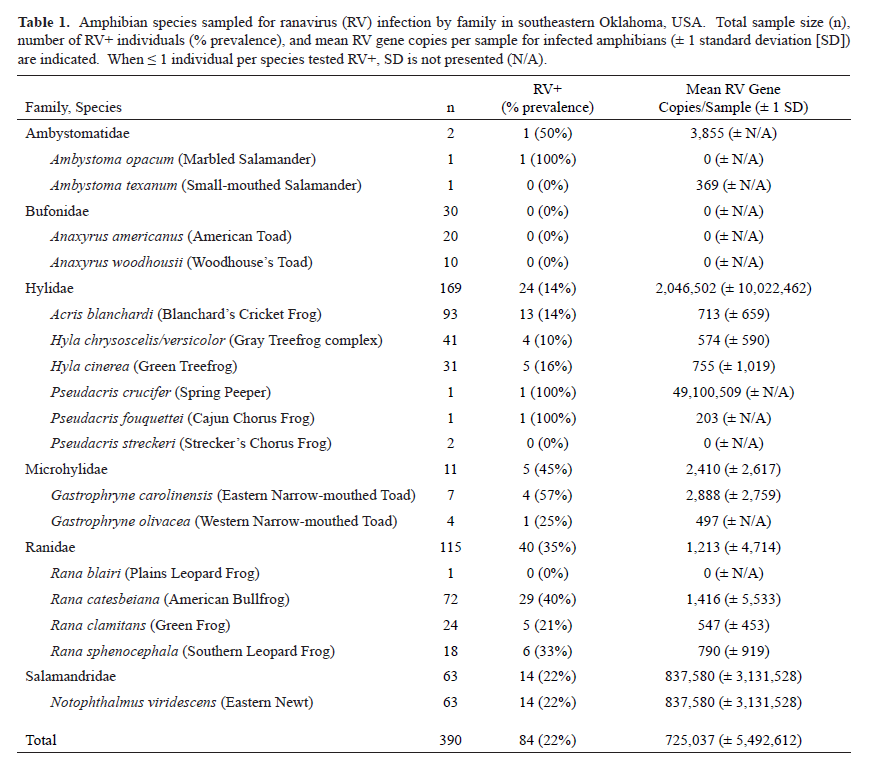
 Several infectious diseases are threatening amphibian species worldwide and have resulted in mass-mortality events across the globe. An emerging group of viral pathogens (ranaviruses) are documented to cause die-offs in amphibian populations worldwide, including in several regions of the U.S. Unfortunately, large gaps remain in our understanding of the distribution of this systemic pathogen in the U.S., including within the state of Oklahoma. To address this gap in our understanding, we carried out surveys of this infectious pathogen across 14 sites in seven southeastern Oklahoma counties in spring 2015, screening 17 amphibian species from this region. Using liver and tail tissue samples collected from individual amphibians, we screened for the presence and infection load of ranavirus. Of the 390 samples, 84 (21.5%) tested positive for ranavirus, with infection prevalence varying among species surveyed. Notably, the family Bufonidae had no samples that tested positive for ranavirus, whereas the remaining families had an infection prevalence ranging from 14–50%. Despite an overall infection prevalence of 21.5%, we detected no clinical signs of ranavirosis and all sampled individuals appeared outwardly healthy. These results provide data on the geographic and host distribution of ranavirus in southeastern Oklahoma, as well as the first documented cases of the pathogen in three species of anurans: Gastrophryne carolinensis (Eastern Narrow-mouthed Toad), G. olivacea (Western Narrow-mouthed Toad), and Pseudacris fouquettei (Cajun Chorus Frog). With widespread ranavirus infection, there is potential for transmission from abundant, widespread species to more vulnerable, state-threatened amphibians.
Davis DR, Farkas JK, Kruisselbrink TR*, Watters JL, Ellsworth ED, Kerby JL, Siler CD. 2019. Prevalence and distribution of ranavirus in amphibians from southeastern Oklahoma, USA. Herpetological Conservation and Biology 14:360–369. [PDF]
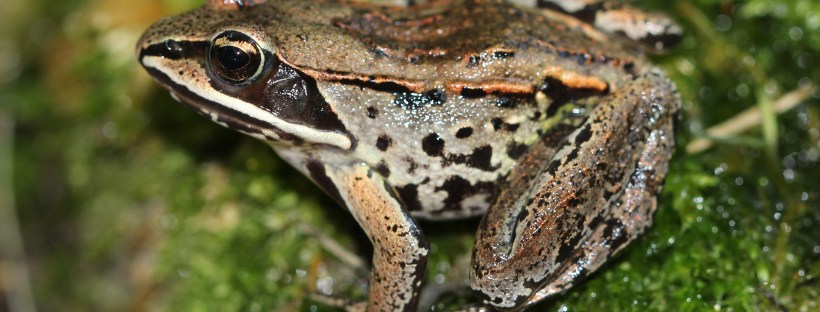
 Historically, only six records of Wood Frogs (Rana sylvatica) existed from South Dakota, all represented by museum specimens from the 1920s. No other Wood Frogs were reported in South Dakota for the next six decades, and the species was presumed extirpated until 1997 when Wood Frog calls were recorded at two sites in northeastern Roberts County. Since 1997, numerous individuals have continued to document Wood Frogs in northeastern Roberts County. It was not until 2016 that Wood Frogs were detected outside of northeastern Roberts County. Here, we report additional records of Wood Frogs from the Prairie Coteau, ca. 50 km southwest of previously known populations.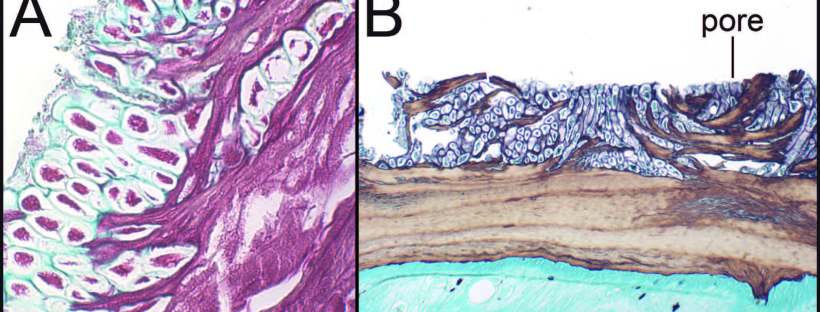
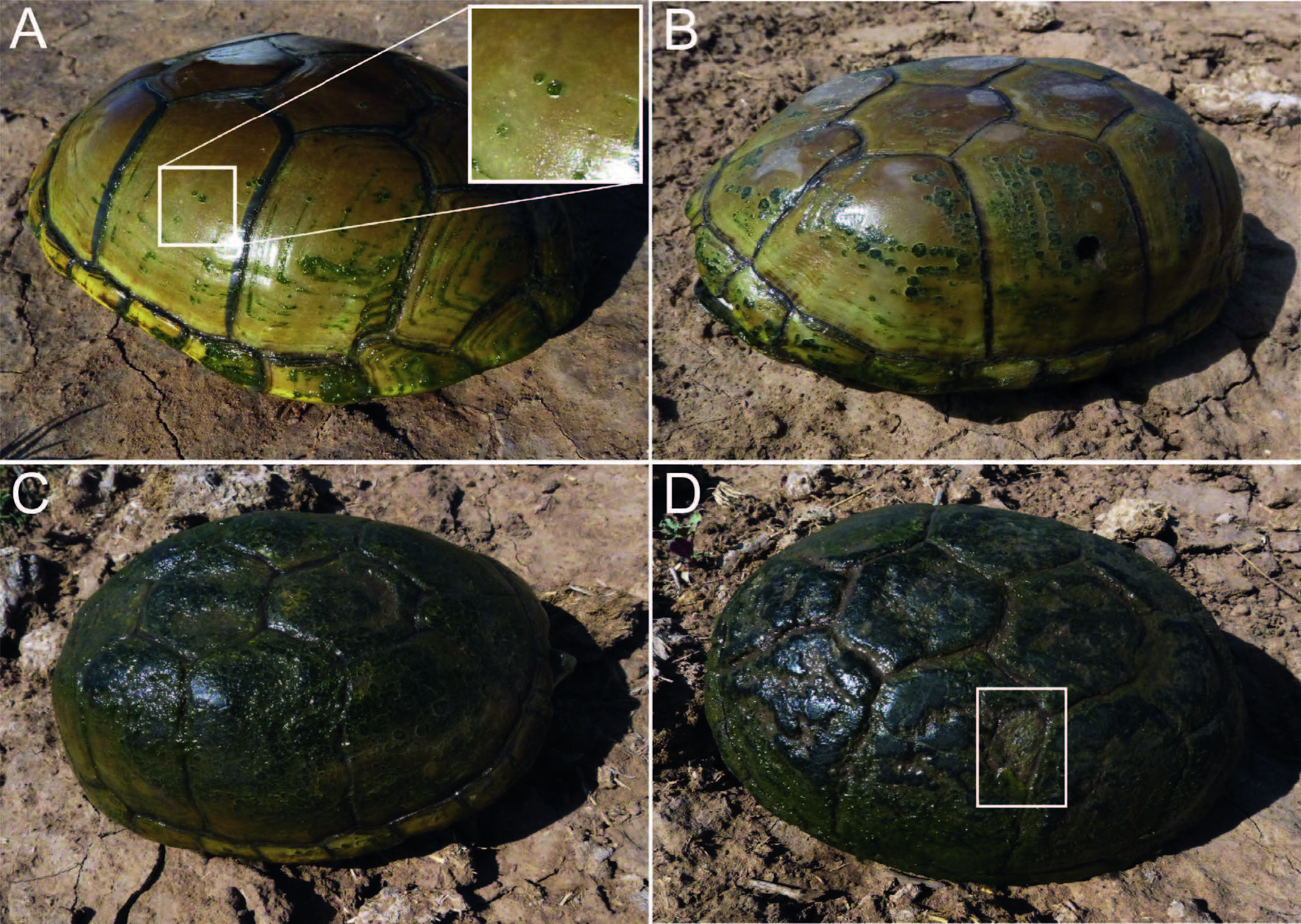 While shell diseases may be often encountered in captive aquatic turtles maintained in less than optimum conditions, cases of nonulcerating shell disease in wild populations are rare. We discovered lesions on the carapace of individual Kinosternon flavescens (Yellow Mud Turtle) adapted to a highly aquatic existence in the artificial ponds of a cattle ranch in the Chihuahuan Desert of west Texas. Because the carapacial lesions seemed to represent a continuum of a single process, we followed the gross changes in the lesions on turtles over a 13-yr period, testing the hypothesis that we were seeing a progressive shell disease. We confirmed our working hypothesis as we observed Arnoldiella chelonum, a common, filamentous alga, protruding from enlarged pores in newly formed shell and growing under translucent shell lamellae. As the disease advanced, our gross and histological studies revealed that algae were found between more of the shell lamellae, eventually culminating with sloughing of lamellae. Erosion of lamellae led to a localized but complete loss of portions of the scute and exposure of underlying bone. We provide data on the occurrence of this condition among the marked population and progression of the lesions to more-severe forms in individual turtles. Studies of specimens in research collections provided evidence of our observed disease process in K. flavescens across time and throughout the distribution of the species in Texas. We suggest that, by capitalizing on permanent artificial water sources, K. flavescens has serendipitously allowed A. chelonum to invade and damage the nonliving portion of the shell.
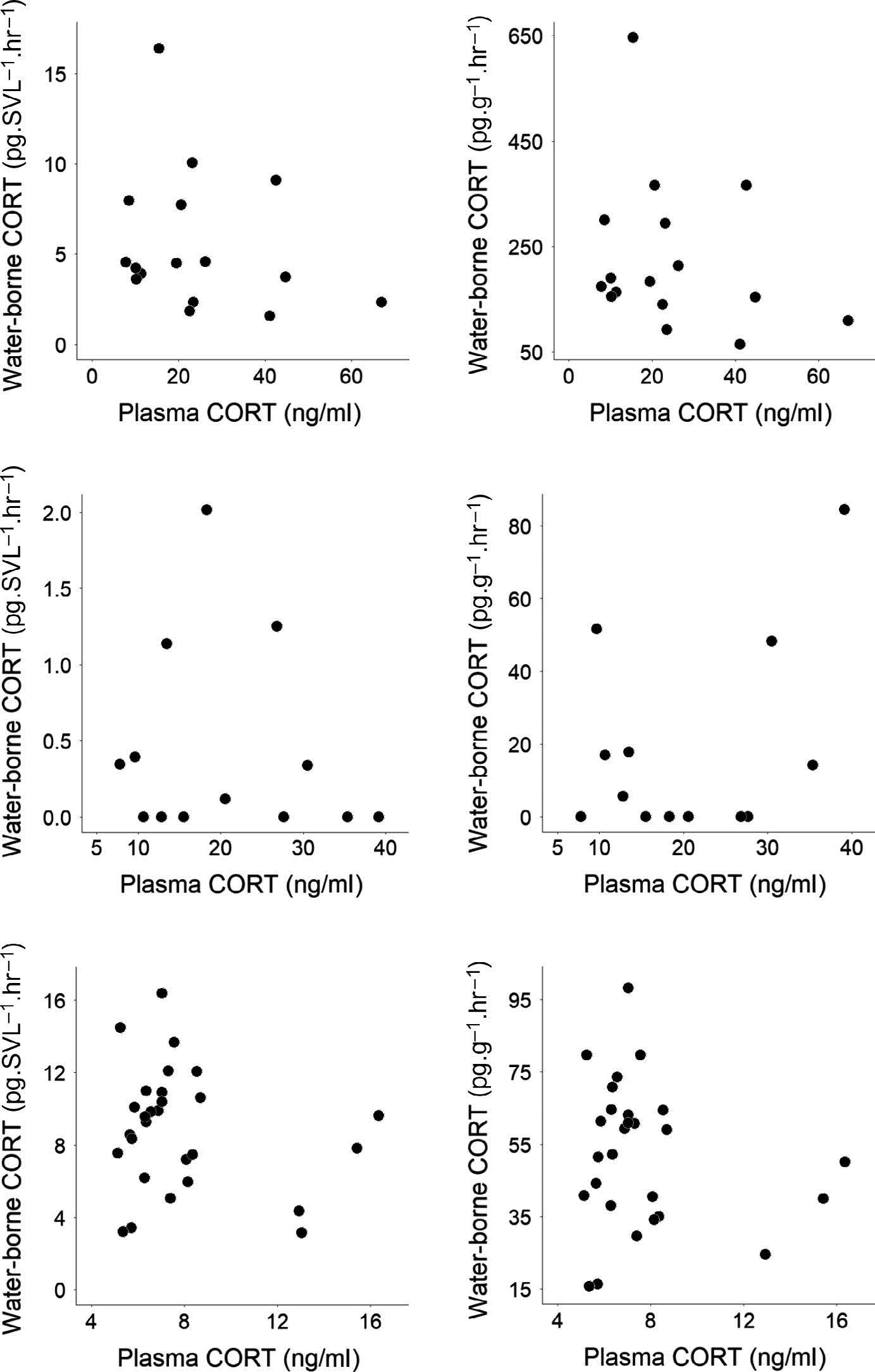 Water‐borne hormone measurement is a noninvasive method suitable for amphibians
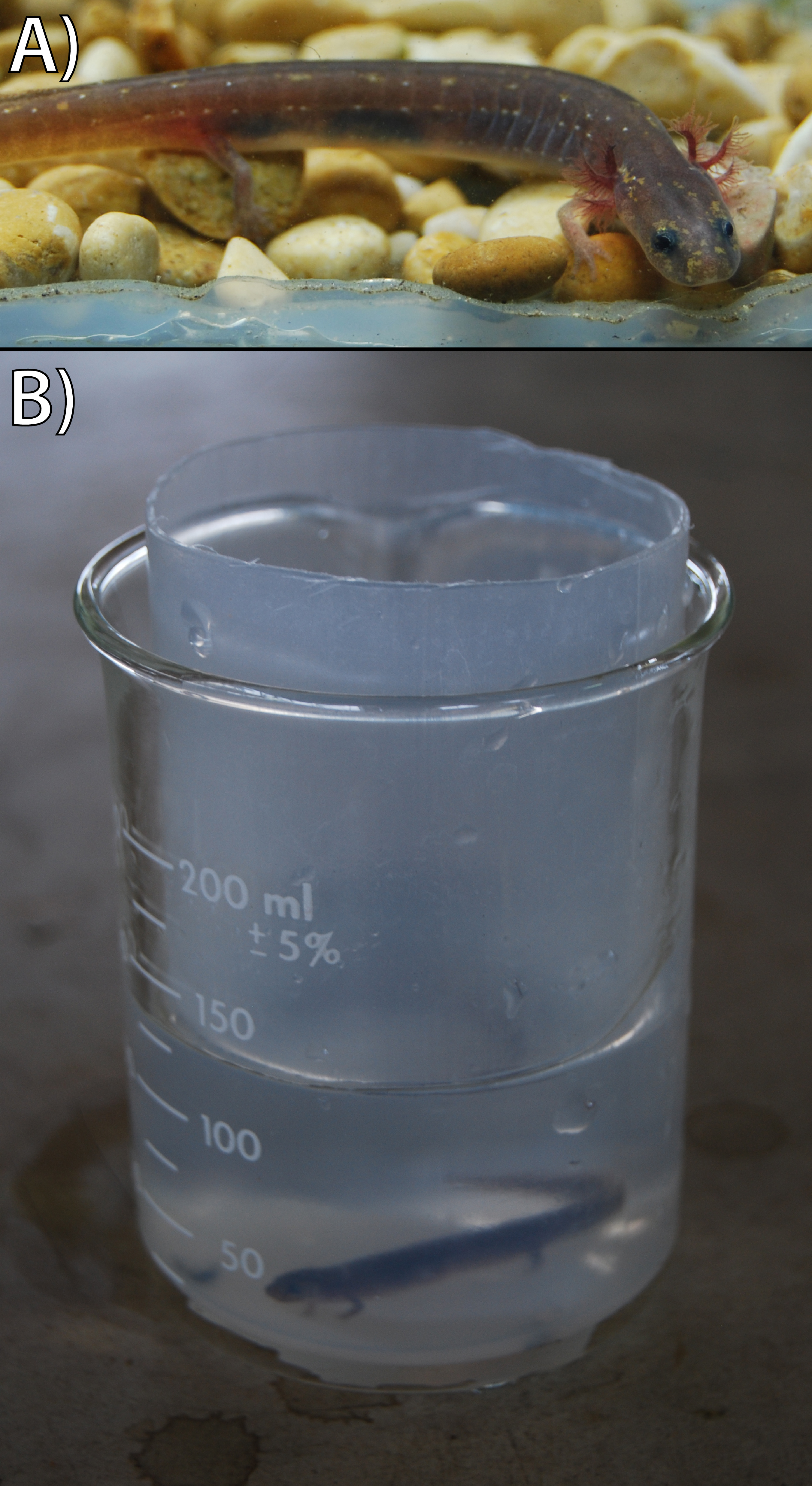 Global climate change is negatively impacting global biodiversity and ectothermic vertebrates, with amphibians being the most imperiled vertebrate taxa. Increased mean global atmospheric temperatures, high rates of habitat degradation, and exposure to infectious diseases, such as chytridiomycosis, have contributed to population declines and extinctions of rare and endangered amphibian species. Field-based monitoring of physiological endocrine traits can help determine the sub-lethal effects of environmental stressors and provide early alerts when populations are chronically stressed. Recent advances in amphibian stress endocrinology include the development and use of non-invasive methods to quantify the glucocorticoid, or stress biomarker, corticosterone. Non-invasive methods, such as urinary, skin and buccal swabs, and water-borne hormone monitoring methods (suited for terrestrial and aquatic dwelling species), are available to quantify baseline and short-term physiological stress responses of amphibians under field settings. In this review, we illustrate, by using two case studies of aquatic and terrestrial amphibian species, the applications of non-invasive corticosterone monitoring methods to advance the ecological knowledge and conservation of imperiled amphibian species, discuss the limitations of these methods, and provide future directions for the use of non-invasive hormone monitoring methods. We highlight the use of non-invasive field endocrinology methods to monitor the impacts of environmental stressors on the physiology of amphibians, which can be applied to advance ecological research, conservation, and management of imperiled species.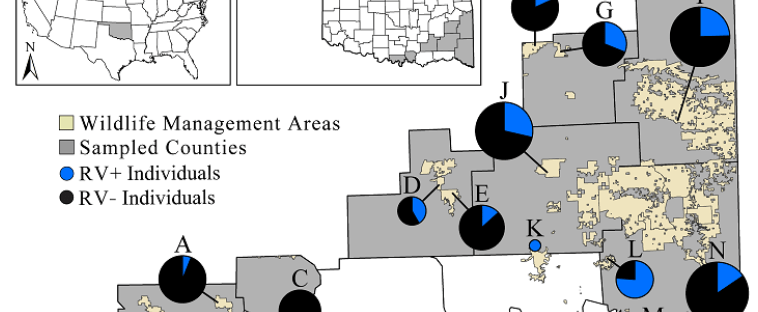

 Declines in amphibians are a global problem, influenced by complex local factors. While many factors contribute to these declines, much attention has been focused on the roles of contaminants and pathogens. Throughout eastern South Dakota, row-crop farming has contributed to habitat degradation for many amphibians, often through increases in environmental contaminants. For two years we visited four wetlands (two reference wetlands, two agricultural wetlands) to measure water-borne corticosterone (CORT) release rates and ranavirus in larval Western Tiger Salamander (Ambystoma mavortium). We found that both water-borne CORT release rates and ranavirus infection load were greater in larval salamanders from agricultural wetlands compared to reference wetlands. We also found that water-borne CORT release rates were greater in ranavirus-infected individuals compared to uninfected individuals and that water-borne CORT is positively correlated with ranavirus infection load. Though the causal relationships among contaminants, CORT, and ranavirus infection are difficult to determine, chronically elevated CORT is known to be immunosuppressive and may result in high infection loads. This study further describes the negative effects of crop production on amphibian health, provides the first evidence of ranavirus in South Dakota, and supports the use of water-borne CORT as a biomarker of amphibian population health in row-crop landscapes.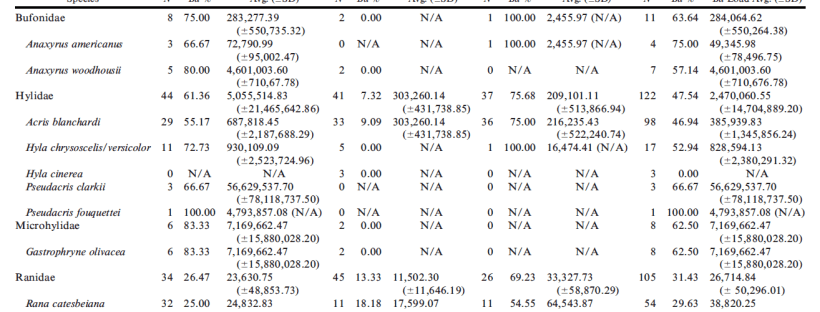
 Chytridiomycosis, an infectious disease caused by the fungus Batrachochytrium dendrobatidis (chytrid or Bd), has not been well studied in Oklahoma. This is of particular concern regarding the connection between seasonality and chytrid infection. To further investigate this connection, chytrid prevalence and infection load were quantified within amphibians in central Oklahoma from March to October, across two sites in Oklahoma Co. and two sites in Cleveland Co. The results show a trend between seasonality and chytrid, with spring and fall showing higher prevalence and summer showing lower prevalence, which coincides closely with the preferred chytrid growth temperatures. Additionally, periods of high rainfall in May 2015 are linked to increased chytrid prevalence, as has been suggested by other research. Additionally, species exhibiting high chytrid prevalence follow the results of previous studies: Blanchard’s Cricket Frog (Acris blanchardi), American Bullfrog (Rana catesbeiana), and Southern Leopard Frog (Rana sphenocephala).
 Spotted Salamanders (Ambystoma maculatum) require vernal pools for breeding habitat. Limited protection and preservation of vernal pools makes suitable habitat creation important. Differences in corticosterone levels, a hormone associated with growth, development, and stress in amphibians, could indicate population health and habitat quality. Our objective was to determine if habitat characteristics in created vernal pools influence corticosterone levels of Spotted Salamander larvae. In May and June of 2015 and 2016, we sampled water-borne corticosterone levels of larval Spotted Salamanders in 34 created vernal pools constructed 1–5 years earlier. Using multiple regression, we determined the best model predicting corticosterone levels included larval total length, pool-water temperature, year sampled, and pool diameter. Pool-water pH, depth, and age; percent cover; and predator presence were not significant predictors. Annual variation in corticosterone levels and habitat characteristics, and positive associations with water temperature and salamander body size highlighted the importance of controlling for external influences. The negative association between pool diameter and corticosterone indicated that larvae in larger pools (up to 12.75-m maximum diameter) were less stressed and potentially healthier. These results indicate that pool diameter contributes to habitat quality and may be important when constructing vernal pools for Spotted Salamanders.
 Two new, noteworthy records for Texas were published in the March 2019 issue of Herpetological Review. The first was a western range extension of the Lesser Siren, Siren intermedia (though there is some taxonomic confusion surrounding this species identification), from the Rio Grande watershed in Kinney County. The second represents a new species of reptile for the state of Texas. I collected several specimens of Sri Lankan House Geckos (Hemidactylus aff. parvimaculatus) in east Texas. This species has not been previously reported from Texas and appears to expanding its range along the I-10 corridor from New Orleans and suspect that it will continue to be discovered in new localities.
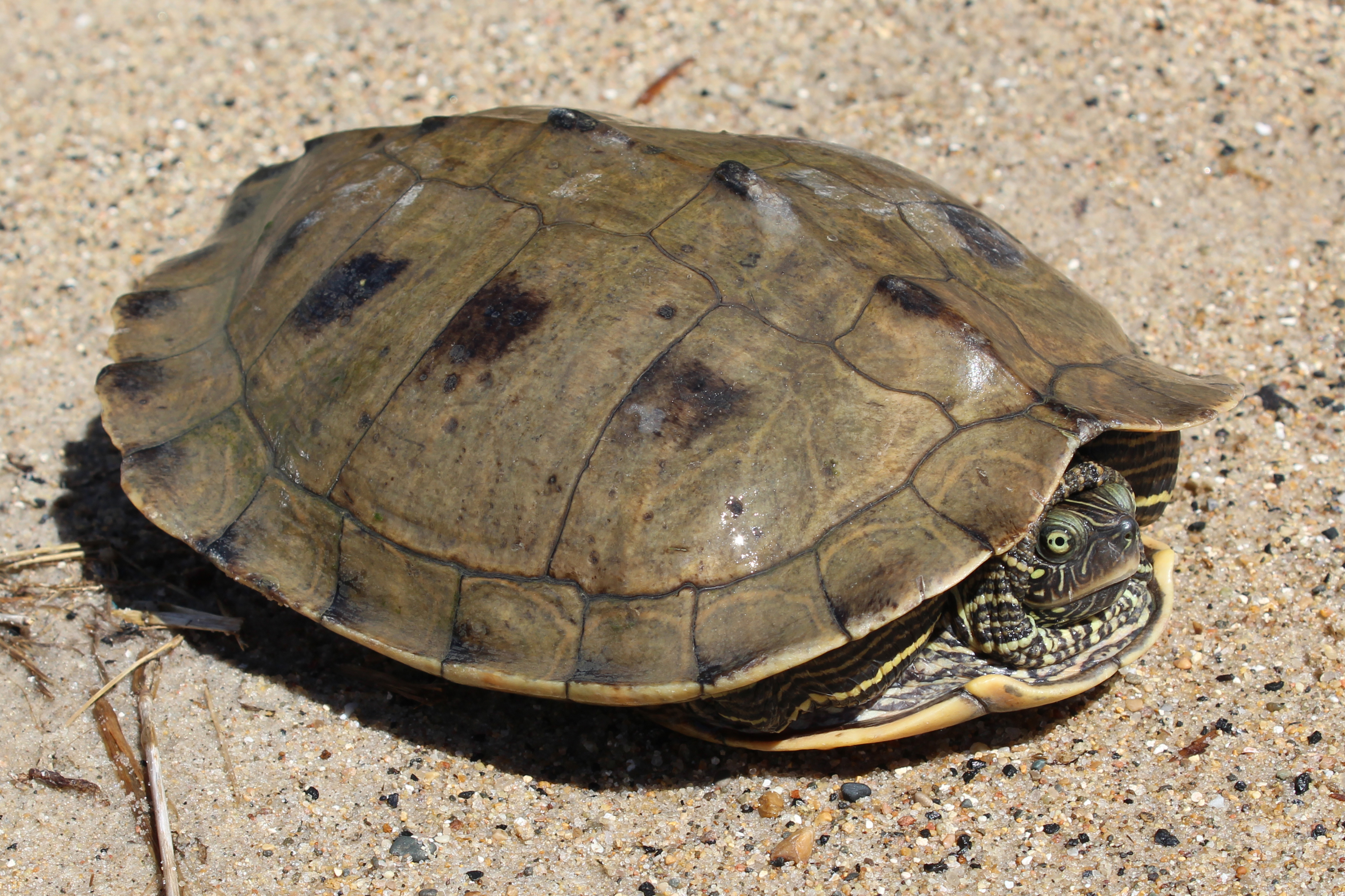 Understanding how environmental factors influence various aspects of freshwater turtle health remains an important yet understudied topic within the context of individual–environment interactions. This is particularly true of hostassociated bacterial microbiota, which are being increasingly recognized as a significant and understudied topic in the context of individual turtle health. While this area of work has expanded in certain areas, research efforts remain limited with regard to host–microbiota interactions in the context of habitat contaminants. Specifically, the commonly used herbicide, glyphosate, is of interest due to its massive worldwide use and known effects on various organisms. Effects of captivity on host-associated microbial community structure also remain largely unknown in various nonmodel organisms. To address these unknown effects of Roundup® and captivity on host-associated microbiomes, we examined the effects of low-level Roundup® exposure and captivity on the cloacal microbiota of the False Map Turtle, Graptemys pseudogeographica. We determined the effect of glyphosate by taking cloacal swabs pre- (0 h) and postexposure (72 h) and examined microbial community beta- and alpha-diversity through 16S rRNA gene high-throughput sequencing. The results of this study indicate that low-level, short-term glyphosate exposure does not significantly alter the microbiota structure of G. pseudogeographica. However, there was a significant decrease in microbial community beta-diversity over time, confirming a trend that has been observed to a limited extent in other non-model organisms when put in laboratory conditions. These results are useful in understanding the baseline cloaca microbial community structure of G. pseudogeographica, as well as the implications and limitations of laboratory-based microbiota studies. Furthermore, this work suggests that low-level and short-term glyphosate exposure does not have a significant effect on the cloacal microbial community structure in wild-caught G. pseudogeographica.
