People
Davis Herpetology Lab

DREW R. DAVIS, PH.D.
Principal Investigator
Assistant Professor of Wildlife Biology
Director, Gennaro Natural History Museum
Associate Curator of Herpetology, ENMU Natural History Museum
Department of Biology, Eastern New Mexico University
Research Affiliate, Biodiversity Collections
Department of Integrative Biology, The University of Texas at Austin
Editor, Herpetological Review
Society for the Study of Amphibians and Reptiles
Google Scholar
ResearchGate
Curriculum Vitae (updated 2 September 2025)
Office: Roosevelt Science Center 258
Lab: Roosevelt Science Center 237
E-mail: drew.davis (at) enmu.edu
Phone: 575.562.2723
Education:
Ph.D. Biological Sciences, University of South Dakota, 2018
M.S. Population and Conservation Biology, Texas State University, 2012
B.S. Biology (Ecology, Evolution, Behavior), The University of Texas at Austin, 2009
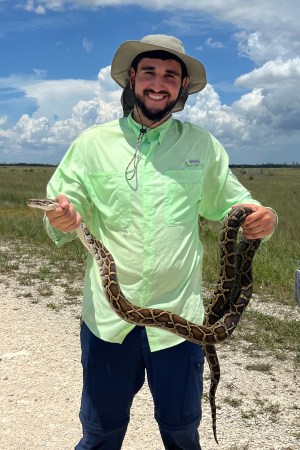
SEBASTIAN SUMMO ELIAS
M.S. Student
Graduate Research Assistant
Education:
M.S. Biology, Eastern New Mexico University (in progress)
B.S. Wildlife Ecology and Conservation, University of Florida, 2022
Research Project: Validating a species distribution model for the Western Ribbonsnake (Thamnophis proximus) in eastern New Mexico
Research Overview: My thesis research is based on conducting surveys for the state-threatened Western Ribbonsnake (Thamnophis proximus) in eastern New Mexico in order to validate a habitat suitability model for the species created by the New Mexico Department of Game and Fish. While doing these surveys, additional data will be collected on the snakes to identify population trends, answer ecological questions, and better understand threats facing this species across the region. I am also working on a project mapping core and peripheral populations of the parthenogenic New Mexico Whiptail (Aspidoscelis neomexicanus) across its range in the southwestern USA.
Publications:
Summo Elias SD, Davis DR. 2025. Thamnophis proximus (western ribbonsnake). Diet. Herpetological Review 56:221–222. [PDF]
Summo Elias SD, Freitas KA, Travieso RE, Davis DR. 2024. Phelsuma grandis (Madagascar giant day gecko). Diet. Herpetological Review 55:569. [PDF]
Summo Elias SD, Davis DR. 2024. Tantilla nigriceps (plains black-headed snake). Predation. Herpetological Review 55:290–291. [PDF]
Summo Elias SD, Cuevas-Hernandez J, Davis DR. 2024. Geographic distribution: Hemidactylus mabouia (wood slave). Herpetological Review 55:218–219. [PDF]
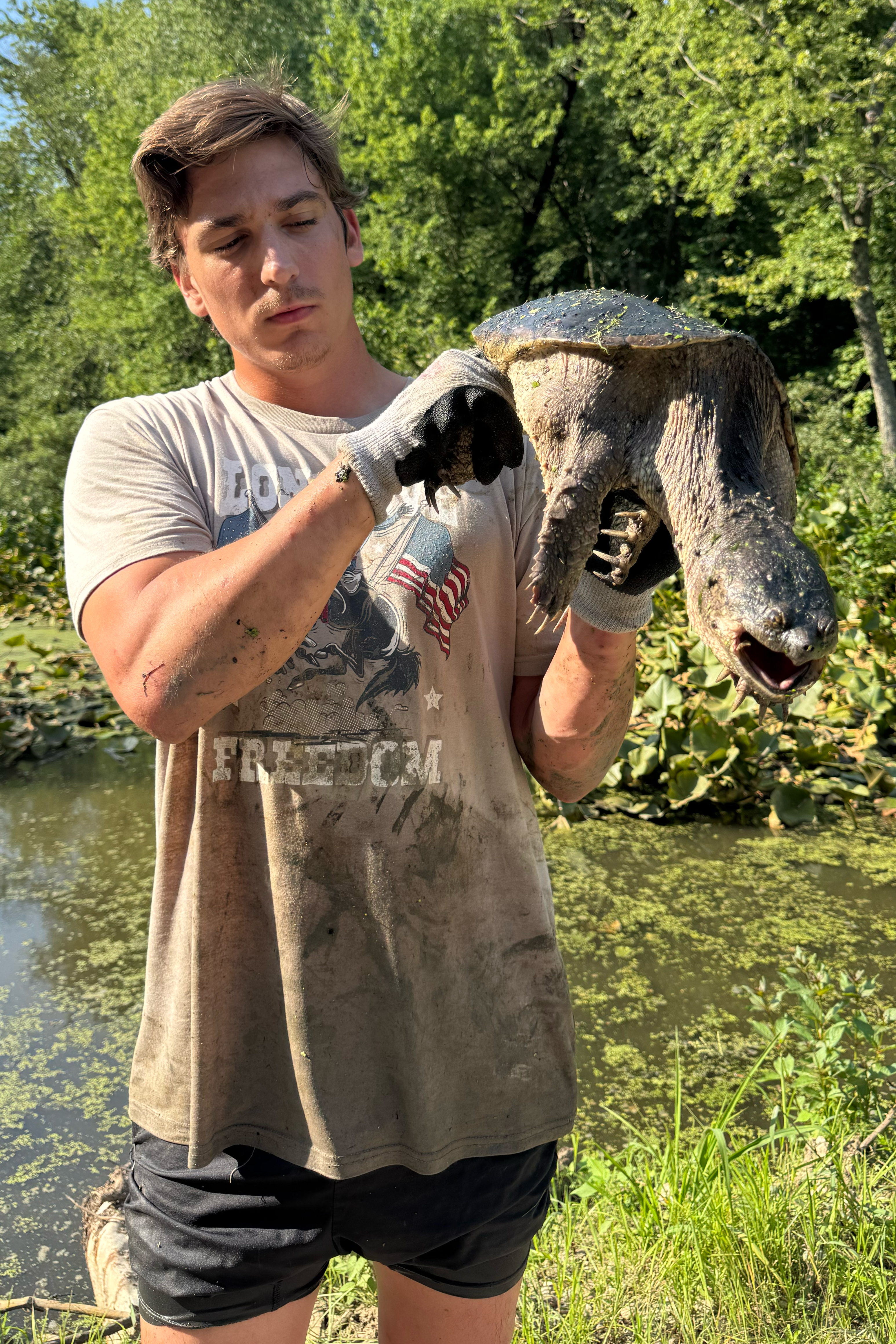 KEVIN E. GREEN
M.S. Student
Graduate Research Assistant
Education:
M.S. Biology, Eastern New Mexico University (in progress)
B.S. Wildlife and Fisheries Sciences, Eastern New Mexico University, 2025
Research Project: Assessing the distribution and conservation status of imperiled aquatic turtles in southwestern Indiana
Research Overview: I am conducting surveys for four species of imperiled turtles in southwestern Indiana: River Cooter, False Map Turtle, Smooth Softshell, and Eastern Mud Turtle. Additionally, I will estimate population sizes and summarize demographic data on these focal species, identify high-quality nesting sites and hot-spots of species abundance and diversity for future conservation action, and engage with the public to generate observations of focal species that will help guide sampling efforts. I am also working on projects documenting the spread of the Common Wall Lizard (Podarcis muralis) along the Ohio River, the diet and parasites of non-native house geckos (Hemidactylus) in south Texas, and the prevalence of amphibian pathogens in an introduced population of Rio Cauca Caecilians (Typhlonectes natans) from south Florida.
Publications:
Green KE, Kuschel JE, Summo Elias SD, Hutcherson ZA, Davis DR. In press. New distributional records of Hemidactylus aff. malcolmsmithi from south Texas, USA. Herpetological Review.
Green KE, Davis DR. In press. Extending the known range of Hemidactylus aff. malcolmsmithi: new records from Louisiana and Mississippi, USA. Herpetological Review.
Green KE, Davis DR. 2024. Rana pipiens (northern leopard frog). Defensive behavior. Herpetological Review 55:549–550. [PDF]
Green KE, Davis DR. 2024. Historic amphibian and reptile records from the Natural History Museum, Eastern New Mexico University. Herpetological Review 55:531–532. [PDF]
Green KE, Power JG, Davis DR. 2024. Osteopilus septentrionalis (Cuban treefrog). Predation. Herpetological Review 55:411–412. [PDF]
 JAKE E. KUSCHEL
M.S. Student
Graduate Research Assistant
Education:
M.S. Biology, Eastern New Mexico University (in progress)
B.S. Environmental Biology (Zoology), Michigan State University, 2024
Research Project: Evaluating the distribution of two imperiled snakes in New Mexico using environmental DNA
Research Overview: I am a lifelong herpetology-obsessed individual and am particularly passionate about snakes. At ENMU, I am working on a project funded by the New Mexico Department of Game and Fish, and will be using environmental DNA to survey for the presence of two imperiled snake species: the Mexican Gartersnake (Thamnophis eques) and the Plain-bellied Watersnake (Nerodia erythrogaster). These surveys will assist in mapping the habitat distribution of these snakes to inform conservation efforts.
Publications:
Kuschel JE, Guadiana CJ, Davis DR. In press. Coniophanes imperialis (regal black-striped snake). Diet. Herpetological Review.
Kuschel JE, Davis DR. 2025. Distributional records of herpetofauna from the Lower Peninsula of Michigan, USA. Herpetological Review 56:44–46. [PDF]
 ZOE A. HUTCHERSON
M.S. Student
Graduate Teaching Assistant
Education:
M.S. Biology, Eastern New Mexico University (in progress)
B.S. Biology (EEOB), Eastern New Mexico University, 2024
B.S. Forensic Science (Biology), Eastern New Mexico University, 2024
Research Project: Using eDNA to assess the distribution of the Rio Grande Cooter (Pseudemys gorzugi) in the Pecos River
Research Overview: I am a dedicated and well-rounded biologist with a passion for research that deepens our understanding of biodiversity and informs conservation. At ENMU, I am using environmental DNA to survey for the presence of imperiled Rio Grande Cooters in New Mexico and Texas. During my undergraduate, I worked on several projects, including investigating range expansion of the Mediterranean Gecko in New Mexico and pathogen prevalence in Sacramento Mountain Salamanders. I will continue to work on some of these projects alongside my thesis research, aiming to support conservation and ecological understanding through a multidisciplinary approach.
Publications:
Hutcherson ZA, Green KE, Summo Elias SD, Davis DR. 2024. Geographic distribution: Hemidactylus turcicus (Mediterranean gecko). Herpetological Review 55:371–372. [PDF]
 SPENCER J. DUFFENDACK
M.S. Student
Graduate Teaching Assistant
Education:
M.S. Biology, Eastern New Mexico University (in progress)
B.S. Biology, Truman State University, 2025
Research Project: Investigating the physiological and environmental factors influencing the distribution of the Rio Grande Cooter (Pseudemys gorzugi)
Research Overview: I am a biologist interested in leveraging ecological research to inform conservation and management, especially as applied to herpetofauna. During my undergraduate studies, I led research investigating the presence of chytrid fungus in an amphibian community in northern Missouri, thermal ecology of Checkered Whiptail Lizards (Aspidoscelis tesselatus) in the Chihuahuan Desert, and the chemoreceptive response of Copperheads (Agkistrodon contortrix) to seasonally abundant prey. At ENMU, I am working on a project investigating the physiological and environmental factors that influence the distribution of the Rio Grande Cooter (Pseudemys gorzugi), a species of greatest conservation need in New Mexico and Texas, and am co-advised by Dr. Corey Green.
 BRADEN J. DEWEERD
M.S. Student
Graduate Research Assistant
Education:
M.S. Biology, Eastern New Mexico University (in progress)
B.S. Biology, Calvin University, 2025
Research Project: Assessing the distribution of SGCN frog species and their threats in eastern New Mexico
Research Overview: I am a wildlife enthusiast dedicated to understanding and protecting imperiled herpetofauna. At ENMU, I will be conducting surveys for three SGCN frog species along the Pecos River: the Blanchard’s Cricket Frog (Acris blanchardi), Rio Grande Leopard Frog (Rana berlandieri), and Plains Leopard Frog (R. blairi). Additionally, I may also conduct surveys for the Spotted Chorus Frog (Pseudacris clarkii) in east-central New Mexico. Using the collected survey data, I will evaluate habitat correlates for species presence to inform conservation and management decisions. I will also monitor invasive American Bullfrog (R. catesbeiana) populations and will contribute to management efforts through community engagement and individual frog removal in the field.
 BENJAMIN W. GENTER
Undergraduate Research Assistant
Education:
B.S. Wildlife Ecology and Conservation, University of Florida (in progress)
B.S. Statistics, University of Florida (in progress)
Research Project: Investigating range expansions for non-native amphibians and reptiles in the southeastern US
Research Overview: I am making collections of amphibians and reptiles across the southeastern USA, with an emphasis on non-native species, to document their distribution and spread. With the rapid expansion of the ranges of many of these non-native species, particularly geckos, collections are crucial to monitor their spread and verify their identifications. Recently, I have helped document new state records of Hemidactylus aff. malcolmsmithi and H. mabouia across the southeastern USA. I am also working to publish species distributional records in Indiana, stemming from both recent collecting efforts and historic collections, and beginning to investigate the distribution and history of Nerodia erythrogaster across south Texas.
Publications:
Genter BW, Davis DR. In press. First records of Hemidactylus aff. malcolmsmithi in Florida and Alabama, USA. Reptiles & Amphibians.
Genter BW, Davis DR. 2025. Smilisca baudinii (Mexican treefrog). Diet. Herpetological Review 56:62–63. [PDF]
Genter BW, Davis DR. 2025. New county records of non-native herpetofauna in Florida, USA, from 2023 and 2024. Herpetological Review 56:40–43. [PDF]
Davis DR, Genter BW, LaDuc TJ. 2024. Invasion history of the Moorish gecko, Tarentola mauritanica (Squamata: Phyllodactylidae), in the USA, with new records of an established population in Texas. Reptiles & Amphibians 31:e21502. [PDF]
Genter BW, LaDuc TJ, Davis DR. 2023. Crotalus scutulatus (Mohave rattlesnake). Defensive behavior. Herpetological Review 54:482. [PDF]
Genter BW, Davis DR. 2022. Geographic distribution: Hemidactylus turcicus (Mediterranean gecko). Herpetological Review 53:629. [PDF]
Genter BW, Davis DR. 2022. Geographic distribution: Haldea striatula (rough earthsnake). Herpetological Review 53:264. [PDF]
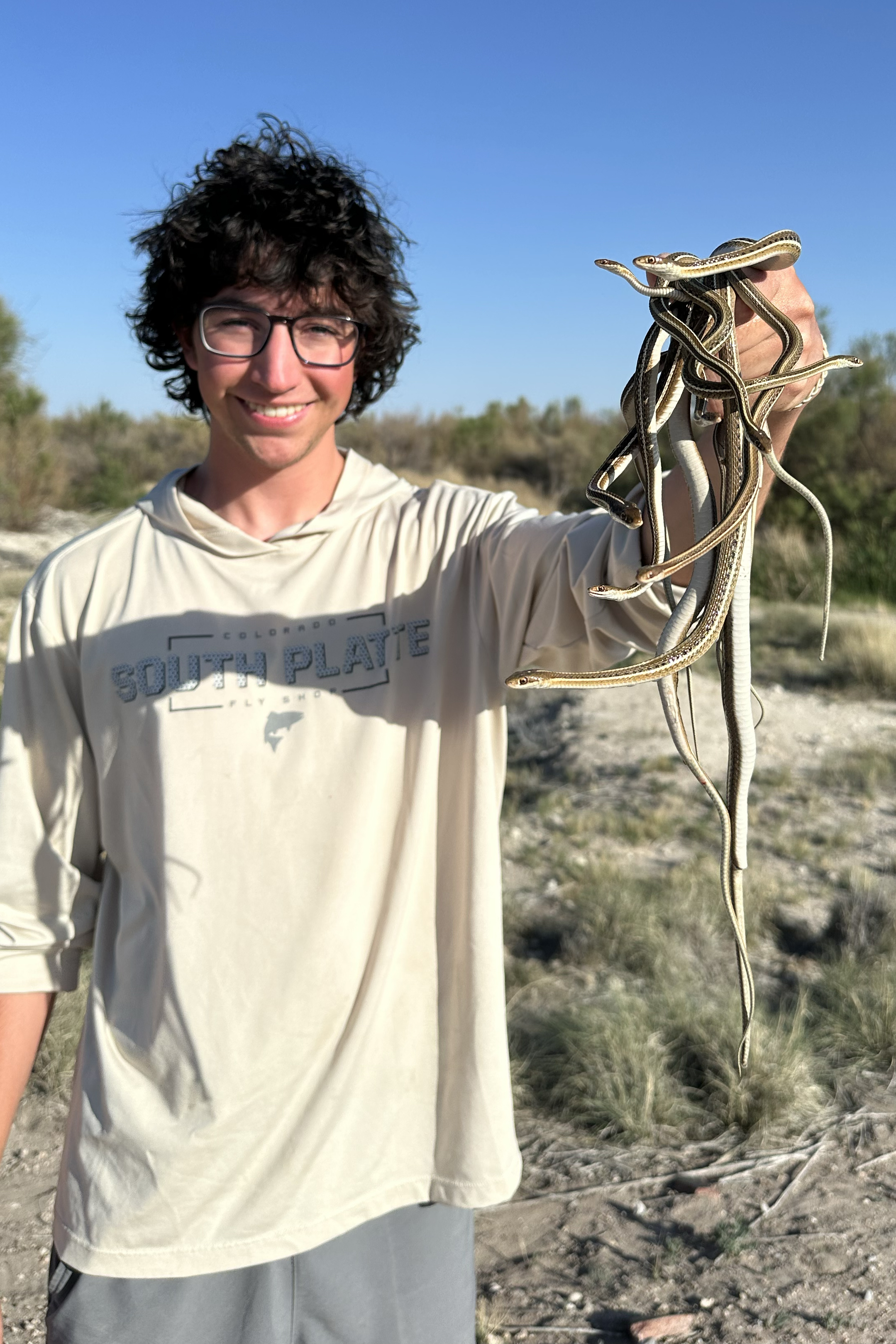 CADEN J. MYERS
Undergraduate Research Assistant
Education:
B.S. Wildlife Ecology and Conservation, University of Florida (in progress)
Research Project: Microhabitat partitioning between sympatric Heterodon platirhinos and H. nasicus in eastern New Mexico
Research Overview: I am an undergraduate researcher who has been assisting with fieldwork and research on projects studying Western Ribbonsnakes, Plain-bellied Watersnakes, Mexican Gartersnakes, and Rio Grande Cooters across New Mexico and Texas over the past two summers. I also led on a project examining the diet of non-native Moorish Geckos (Tarentola mauritanica) from San Antonio, Bexar County, Texas, and am in the process of publishing these data. Recently, this work has also expanded to include both external and internal parasites found in these non-native lizards. Over 2026, I will be leading surveys for Eastern Hog-nosed Snakes in east-central New Mexico to generate verifiable occurrence records and to assess microhabitat correlates of detection. Throughout all of this, I have been actively collecting voucher specimens of amphibians and reptiles to help document species occurrence, especially in regions where there has been limited survey efforts. Outside of academia, I enjoy field herping and photography.
Publications:
Myers CJ, Genter BW, Davis DR. In review. County records of amphibians and reptiles from the High Plains ecoregion of Texas, USA. Herpetological Review
Myers CJ, Genter BW, Green KE, Kuschel JE, Duffendack SJ, Davis DR. In press. Geographic distribution: Tarentola mauritanica (Moorish gecko). Herpetological Review.
Myers CJ, Davis DR. 2025. Terrapene ornata (ornate box turtle). Diet. Herpetological Review 56:199. [PDF]
 MADDEN M. HAAG
Post-baccalaureate Research Assistant
Education:
B.S. Wildlife Ecology and Conservation, University of Florida, 2026
Research Project: (pending)
Research Overview: I’m a recent graduate of the University of Florida and am working as a summer technician, assisting with several projects in the Davis Herpetology Lab. These projects include conducting surveys for imperiled frogs, performing eDNA surveys for natricine snakes, and assessing the physiological condition of Rio Grande cooters across the Pecos River. At the University of Florida, I studied Wildlife Ecology and Conservation and worked as a collections assistant in both the herpetology and paleontology departments at the Florida Museum of Natural History. During this time, I conducted research on amphisbaenid ecology, squamate osteology, herpetological niche modeling, and large extinct sea boas. Outside of my professional work, I enjoy field herping, hiking, fossil hunting, and photography.
You?
Send me an e-mail to inquire about student position availability: drew.davis (at) enmu.edu. I am recruiting students for the positions listed below:
- M.S. students: Motivated students are encouraged to contact me if they are interested in developing a graduate research proposal for external funding (e.g, NSF GRFP). I am happy to help sponsor student research on topics where our interests overlap or share a common theme. Additionally, I am able to periodically accept student interested in Graduate Assistantships to pursue independent research topics focusing on the ecology and conservation of amphibians and reptiles. Please reach out to me to discuss possibilities further.
- Undergraduate and pre-college students: I am recruiting undergraduate students (at ENMU or elsewhere) and pre-college (high school) students to participate with on-going research in the lab or to begin independent research projects. I strongly encourage participation in research by students of all ages and am happy to help facilitate this whenever possible. Opportunities specific to pre-college (high school) students exist and I’m happy to help direct you to these.
Previous Students
Graduate Students
- Sean M. Collins (M.S. Agricultural, Environmental, and Sustainability Sciences; The University of Texas Rio Grande Valley, 2022): Examination of amphibian community and environmental relationships in South Texas using environment DNA (eDNA)
- Rebecca T. Chastain (M.S. Biology; The University of Texas Rio Grande Valley, 2022): The potential impact of climate change on the distributions of Eleutherodactylus cystignathoides and E. planirostris (Anura: Eleutherodactylidae)
- Padraic S. Robinson (M.S. Agricultural, Environmental, and Sustainability Sciences; The University of Texas Rio Grande Valley, 2021): Status, distribution, and conservation of the Black-spotted Newt (Notophthalmus meridionalis) in south Texas
- Krista M. Ruppert (M.S. Agricultural, Environmental, and Sustainability Sciences; The University of Texas Rio Grande Valley, 2020): Development and assessment of an environmental DNA (eDNA) assay for the Rio Grande siren and review of eDNA metabarcoding applications (website)
- Amy P. Bogolin (M.S. Agricultural, Environmental, and Sustainability Sciences; The University of Texas Rio Grande Valley, 2020): Comparing novel and traditional sampling methodologies to analyze the population status of the Rio Grande cooter (Pseudemys gorzugi)
Undergraduate Students
- Reagan N. Moritomo (B.S. Wildlife and Fisheries Sciences; Eastern New Mexico University, 2025): Behavioral responses of explosive-breeding anurans to invertebrate predators
- Joshua T. Gonzalez (B.S. Wildlife and Fisheries Sciences; Eastern New Mexico University, 2023): Mapping the distribution of the Smooth Softshell (Apalone mutica) in the Canadian River
- Kalie M. Leonard (B.S. Biology; University of South Dakota, 2018): The effects of the neonicotinoid clothianidin on larval Western Tiger Salamanders
- Rachel E. Johannsen (B.S. Biology; University of South Dakota, 2017): Curating and georeferencing voucher specimens of amphibians and reptiles in South Dakota
- Andrew D. Koch (B.S. Biology; University of South Dakota, 2017): Effects of agricultural contaminants and ranavirus infection on stress hormone levels in Plains Leopard Frogs (Rana blairi)
- Gabrielle A. Maltaverne (B.S. Wildlife and Fisheries Sciences; South Dakota State University, 2016): Establishing amphibian and reptile teaching collections at South Dakota State University and Oak Lake Field Station
- Katie J. Ferguson (B.S. Biology; University of South Dakota, 2014): Examining the influence of agricultural tile drainage on water-borne hormone levels of larval Western Tiger Salamanders
- Dominic L. DeSantis (B.S. Wildlife Biology; Texas State University, 2013): Predator avoidance in the Barton Springs Salamander, Eurycea sosorum
- Michael J. Edwards (B.S. Biology; Texas State University, 2012): Mosquitofish predation on Eurycea salamander eggs and larvae

 Drew R. Davis, Ph.D.