
 Two new, noteworthy records for Texas were published in the March 2019 issue of Herpetological Review. The first was a western range extension of the Lesser Siren, Siren intermedia (though there is some taxonomic confusion surrounding this species identification), from the Rio Grande watershed in Kinney County. The second represents a new species of reptile for the state of Texas. I collected several specimens of Sri Lankan House Geckos (Hemidactylus aff. parvimaculatus) in east Texas. This species has not been previously reported from Texas and appears to expanding its range along the I-10 corridor from New Orleans and suspect that it will continue to be discovered in new localities.
Davis DR, Ruppert KM, Kline RJ. 2019. Geographic distribution: Siren intermedia (Lesser Siren). Herpetological Review 50:95–96. [PDF]
Davis DR, LaDuc TJ. 2019. Geographic distribution: Hemidactylus aff. parvimaculatus (Sri Lankan House Gecko). Herpetological Review 50:102. [PDF]

 Understanding how environmental factors influence various aspects of freshwater turtle health remains an important yet understudied topic within the context of individual–environment interactions. This is particularly true of hostassociated bacterial microbiota, which are being increasingly recognized as a significant and understudied topic in the context of individual turtle health. While this area of work has expanded in certain areas, research efforts remain limited with regard to host–microbiota interactions in the context of habitat contaminants. Specifically, the commonly used herbicide, glyphosate, is of interest due to its massive worldwide use and known effects on various organisms. Effects of captivity on host-associated microbial community structure also remain largely unknown in various nonmodel organisms. To address these unknown effects of Roundup® and captivity on host-associated microbiomes, we examined the effects of low-level Roundup® exposure and captivity on the cloacal microbiota of the False Map Turtle, Graptemys pseudogeographica. We determined the effect of glyphosate by taking cloacal swabs pre- (0 h) and postexposure (72 h) and examined microbial community beta- and alpha-diversity through 16S rRNA gene high-throughput sequencing. The results of this study indicate that low-level, short-term glyphosate exposure does not significantly alter the microbiota structure of G. pseudogeographica. However, there was a significant decrease in microbial community beta-diversity over time, confirming a trend that has been observed to a limited extent in other non-model organisms when put in laboratory conditions. These results are useful in understanding the baseline cloaca microbial community structure of G. pseudogeographica, as well as the implications and limitations of laboratory-based microbiota studies. Furthermore, this work suggests that low-level and short-term glyphosate exposure does not have a significant effect on the cloacal microbial community structure in wild-caught G. pseudogeographica.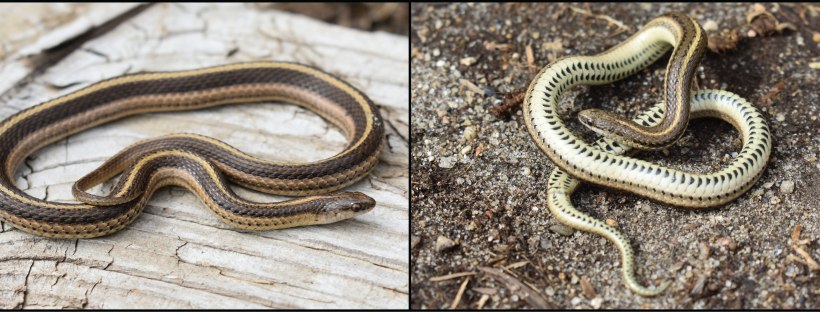
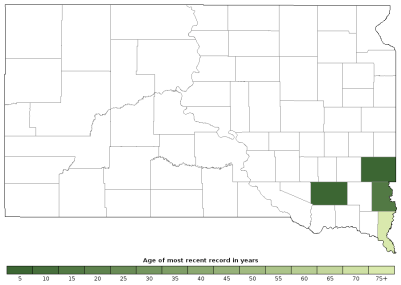
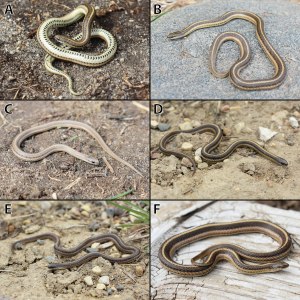 Earlier this year I was awarded funding from South Dakota Game, Fish and Parks to survey for the state-endangered Lined Snake (Tropidoclonion lineatum) along the James River in southeastern South Dakota (see
 Global amphibian decline continues to be a great concern despite our increased understanding of the causes behind the observed patterns of the decline, such as habitat modification and infectious diseases. Although there is a large body of literature on the topic of amphibian infectious diseases, pathogen prevalence and distribution among entire communities of species in many regions remain poorly understood. In addition to these geographic gaps in our understanding, past work has focused largely on individual pathogens, either Batrachochytrium dendrobatidis (Bd) or ranavirus (RV), rather than dual infection rates among host species. We sampled for prevalence and infection load of both pathogens in 514 amphibians across 16 total sites in northeastern Oklahoma. Amphibians were caught by hand, net, or seine; they were swabbed to screen for Bd; and liver tissue samples were collected to screen for RV. Overall results of quantitative PCR assays showed that 7% of screened individuals were infected with RV only, 37% were infected with Bd only, and 9% were infected with both pathogens simultaneously. We also documented disease presence in several rare amphibian species that are currently being monitored as species of concern due to their small population sizes in Oklahoma. This study synthesizes a growing body of research regarding infectious diseases among amphibian communities in the central United States.

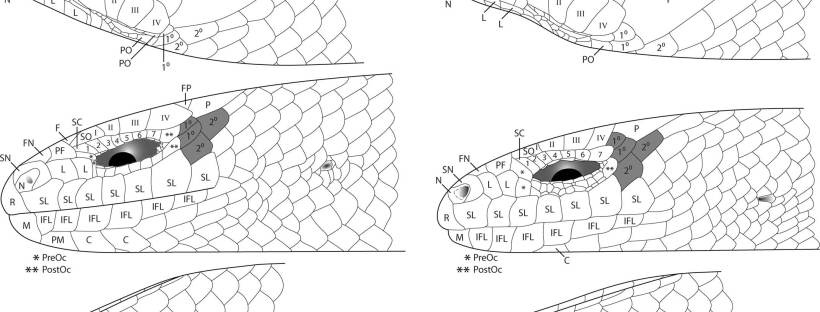
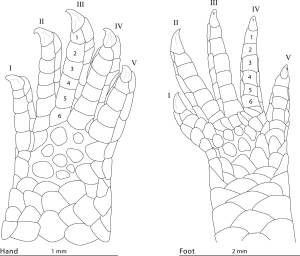 Based on molecular and morphological data sets, we describe a new species of scincid lizard of the genus Lygosoma from Indochina, and redescribe true Lygosoma quadrupes (Linnaeus, 1766). The new species is small and slender, and represents the third member of the L. quadrupes complex, increasing the diversity of Lygosoma species recognized in southeast Asia to 24. Based on the reevaluation of vouchered specimens from the type locality of L. quadrupes sensu Linnaeus (1766), the recognized geographic distribution of true L. quadrupes is restricted to the island of Java in Indonesia. With 10 species of Lygosoma recognized in Thailand, the country possesses considerable species-level diversity of these enigmatic, semifossorial skinks. In addition to being one of the smallest species in the genus, the new species can be distinguished from all congeners by features of its external morphology, including having small relative limb lengths, longer trunk length, and greater numbers of axilla–groin and paravertebral scale rows. Phylogenetic analyses support three divergent lineages corresponding to recognized and newly described members of the L. quadrupes complex. The descriptions underscore the need for continued and comprehensive biodiversity survey work throughout much of Southeast Asia, particularly in Indochina, where scincid diversity remains poorly understood.


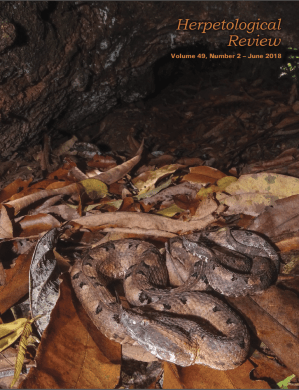 A new publication documenting 54 new distributional records of 17 species of amphibians and reptiles in South Dakota, all collected during 2017, was published in the June 2018 issue of Herpetological Review. Included are numerous records of Boreal Chorus Frogs (n=8) and Painted Turtles (n=8). Also included are six new records of Northern Leopard Frogs, a species for which there is now vouchered material from every county in the state.
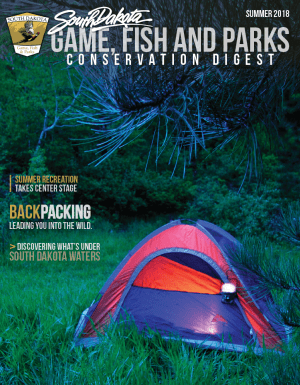 This spring I was asked to write an article about my efforts in mapping amphibians and reptiles across South Dakota. Since 2012, I have collected voucher specimens and photographs of amphibians and reptiles that I encountered at research study sites, during camping trips, driving down county roads, and pretty much every other time I was outdoors when it wasn’t winter. These records represent a significant increase (>60%) in the number of verifiable records from the state and provide much needed voucher material for current and future studies. While I continue to collect voucher specimens from the state, citizen scientists are also contributing to what is known about distributions of species in the state. In 2017, I launched a new website, Amphibians and Reptiles of South Dakota (
 Drew R. Davis, Ph.D.