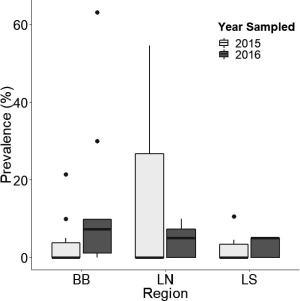
 Ranavirosis is a disease of high concern for amphibians due to widespread documentation of its lethal and sublethal impacts and its high transmission potential across populations and species. We investigated whether Spotted Salamander (Ambystoma maculatum) ranavirus prevalence and viral load were associated with habitat characteristics, genetic diversity, corticosterone levels, and body size. In 2015 and 2016, we sampled 34 recently created vernal pools in the Monongahela National Forest, West Virginia, USA. We collected tail clippings from 1,128 Spotted Salamander larvae and waterborne hormone samples from 436 of those larvae, along with eight environmental characteristics of the pools. Over the 2-yr period, we detected ranavirus in 62% of pools, with prevalence ranging from 0% to 63% (mean, 7.68%). Spotted Salamander size was positively correlated with ranavirus presence and viral load; however, we did not find associations between ranavirus prevalence or viral load and habitat characteristics, Spotted Salamander genetic diversity, relatedness, effective number of breeders, or corticosterone levels. The widespread occurrence of ranavirus in the vernal pools illustrates the potential for rapid natural introduction of the pathogen to created wetlands. Managers could consider monitoring local distributions of ranavirus before creation of new vernal pools to guide strategic placement of the wetlands to minimize occurrence and prevalence of this pathogen.
Millikin AR, Davis DR, Brown DJ, Woodley S, Coster S, Welsh A, Kerby JL, Anderson JT. 2023. Prevalence of ranavirus in spotted salamander (Ambystoma maculatum) larvae from created vernal pools in West Virginia, USA. Journal of Wildlife Diseases 59:24–36. [PDF]
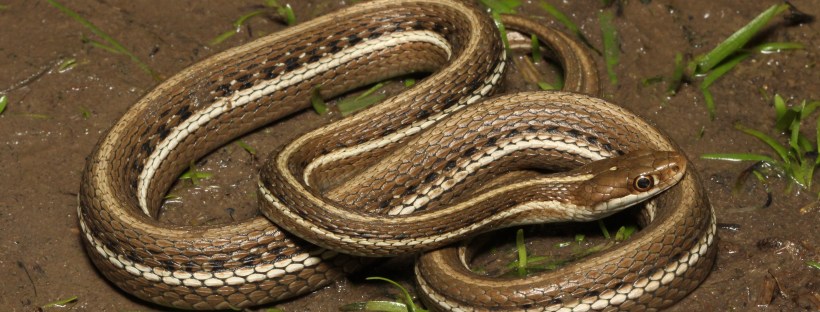
 The Davis Herpetology Lab has been awarded funding from the New Mexico Department of Game and Fish to conduct surveys for Western Ribbonsnakes (Thamnophis proximus) along the Pecos and Canadian rivers in eastern New Mexico. There has been little focused research on this state-threatened species, and therefore, information surrounding it remains limited. This project will last allow for two seasons of field surveys and will support the thesis work of M.S. student Sebastian Summo Elias. We will conduct multiple forms of surveys in order to generate detections of this species across its historic range, hopefully confirming the persistence of historic populations and identifying new areas where this species occurs.
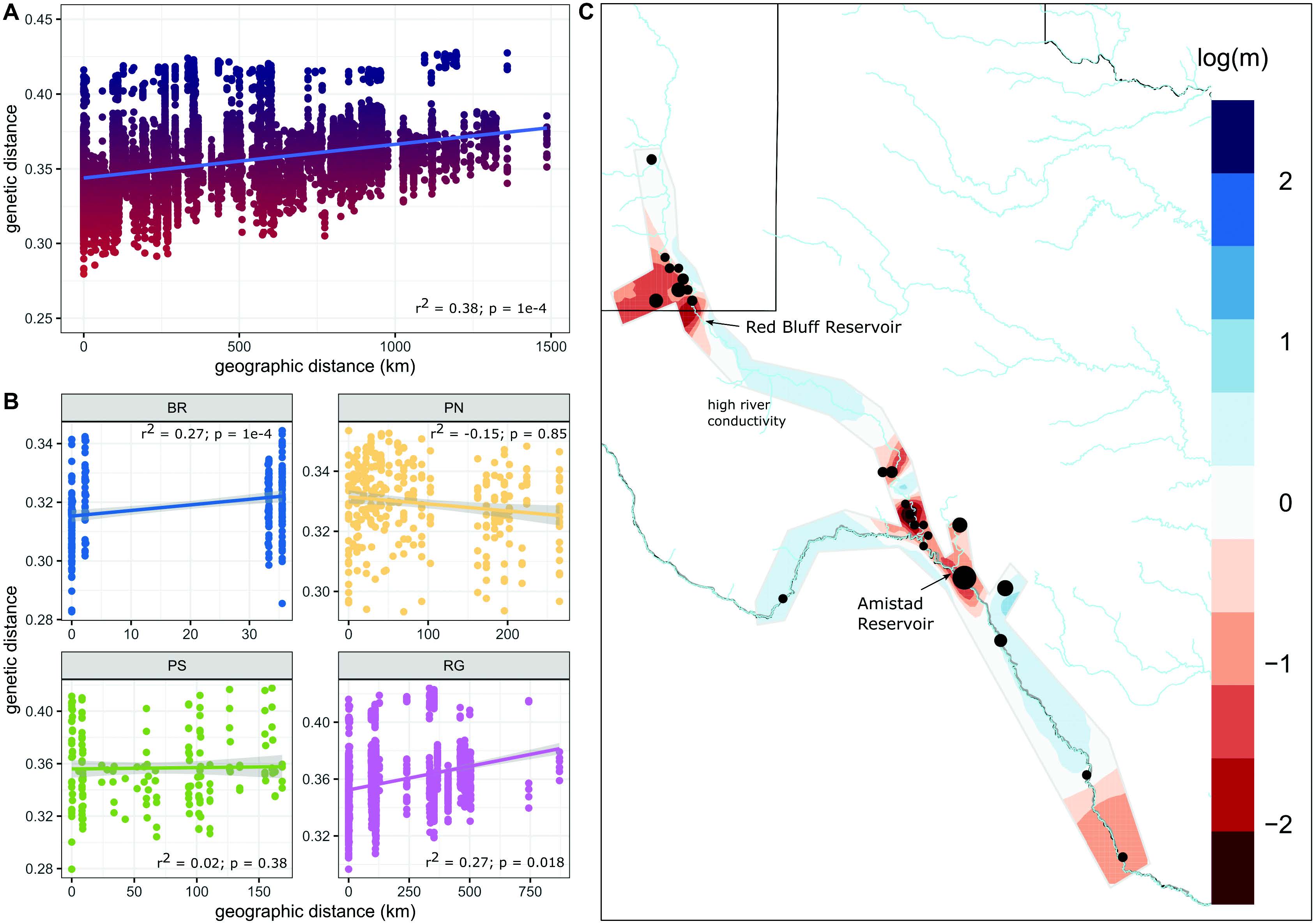 The lower Rio Grande and Pecos River of the southwest United States have been heavily modified by human activities, profoundly impacting the integrity of their aquatic wildlife. In this context, we focused our study on the population genomics of the Rio Grande Cooter (Pseudemys gorzugi), a freshwater turtle of increasing conservation concern, residing in these two rivers and their tributaries. The genetic data revealed two distinct populations: one in the Pecos and Black Rivers of New Mexico and another in the Rio Grande and Devils River of Texas, with admixed individuals identified at the confluence of the Rio Grande and Pecos River. In addition to having a smaller geographic range, we found lower observed heterozygosity, reduced nucleotide diversity, and a smaller effective population size (Ne) in New Mexico population. Our results depict a significant isolation-by-distance pattern across their distribution, with migration being notably infrequent at river confluences. These findings are pivotal for future conservation and restoration strategies, emphasizing the need to recognize the unique needs of each population.
 Sebastian was awarded a Howard McCarley Student Research Award from the Southwestern Association of Naturalists (SWAN) for his
 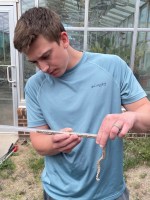 Kevin was awarded funding from Midwest Partners in Amphibian and Reptile Conservation (MWPARC) through their Fueling Student Field Experiences Travel Grant titled “Examining the Current Distribution of the Invasive Common Wall Lizard (Podarcis muralis) along the Ohio River.” This funding will help Kevin participate in a trip to survey for these non-native lizards this summer and collaborate with the Indiana DNR on this project.
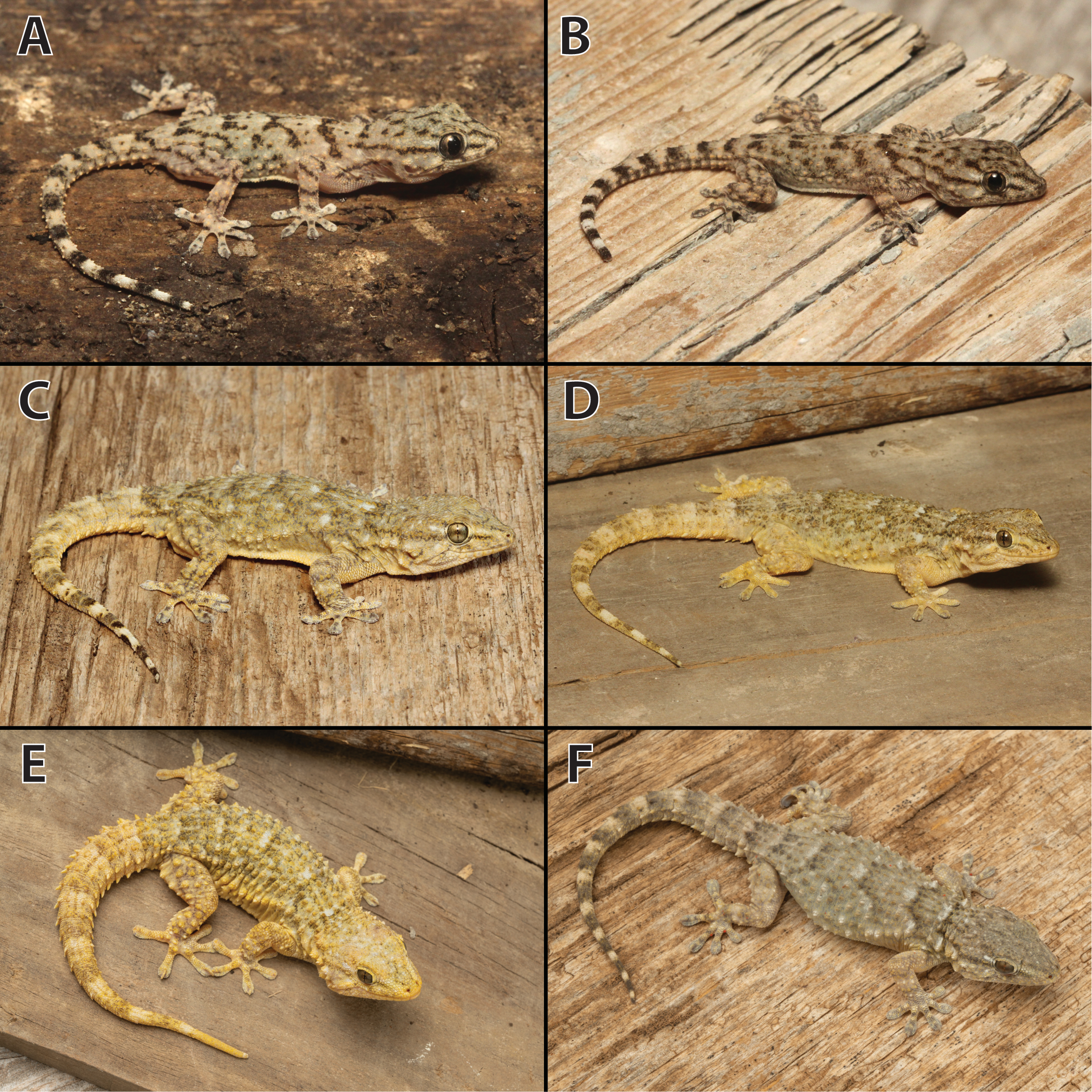 The Moorish Gecko, Tarentola mauritanica, is a large species of gecko native to the Mediterranean Region of Europe and northern Africa. As with many other species of geckos, T. mauritanica has been introduced outside of its native range, often through jump dispersal and hitchhiking through the trade of commercial goods. Here, we summarize the occurrence of this species in the United States and present new data on an established population in Bexar County, Texas. Surveys conducted in 2022 and 2023 resulted in 59 vouchered specimens collected from 11 separate, distinct sites across the San Antonio metropolitan area. Photographic observations of this species in the area exist from 2018, and further support the widespread occurrence of this species in the region. Currently, T. mauritanica is known from three states in the USA (California, Florida, Texas), though it may soon spread into new areas. Future studies are needed to examine the ecological consequences of this non-native species.


 Cherax quadricarinatus (von Martens, 1868) is a large parastacid crayfish (Decapoda: Parastacidae) native to Australia and Papua New Guinea. Due to various factors, C. quadricarinatus is an emerging invasive species in an increasing number of regions across the world. Deleterious ecological effects of C. quadricarinatus introduction have been documented in many of these regions, and its spread has been monitored and restricted where possible. Previously, only a small, isolated population of C. quadricarinatus in southern California had been reported within the continental United States. Here, we report the collection of three adult C. quadricarinatus from Brownsville, Cameron County, Texas, the first record of this species in the state and only the second record for the continental United States. Given the connectivity of aquatic habitats in the area and the duration for which the population has likely been present, there is evidence that C. quadricarinatus is poised to invade subtropical watersheds of the southern United States. The ecological effects of C. quadricarinatus on aquatic ecosystems in the region are not yet fully understood, but further research is warranted to effectively mitigate negative impacts that may occur and to guide efforts to manage or eradicate these populations.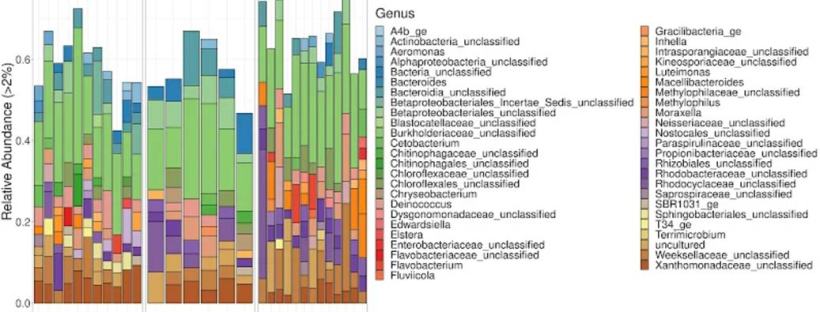
 Turtle populations around the world are continually confronted with changing environments that affect their ecology and conservation status. Among freshwater turtles, population dynamics are thought to be mediated by complex yet often cryptic causes. One recent direction of focus in addressing these causes is the turtle-associated microbiota. In turtles, the gut-associated microbiota is of exceptional interest due to its continual association with host species under changing conditions. Diet-based fluctuations and changes in microbial diversity may correspond to varying external environments at both the individual and population level. Environmental responses are of particular interest due to the anthropogenic changes that may underlie them. Pollutants, disruption of climatic patterns, and habitat fragmentation all have the potential to affect turtle-associated microbiota and subsequent population and species conservation. To better understand potential human-induced changes, the diversity of turtle-associated microbiota over local spatial gradients must be better understood.We examined microbial community a- and b-diversity among 30 adult False Map Turtles (Graptemys pseudogeographica) at three sites within the lower Missouri River, United States. Our results indicate significant microbial community centroid differences among sites (b-diversity), which are likely mediated by various local environmental factors. Such factors will have to be carefully considered in any future attribution of anthropogenic determinants on turtle-associated microbiota as it relates to turtle population dynamics.
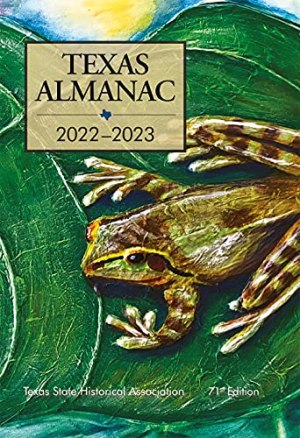 I recently revised and expanded (along with Travis J. LaDuc, Curator of Herpetology at The University of Texas at Austin) two chapters in the 71st Edition of the Texas Almanac: one on Texas wildlife and the other on threatened and endangered wildlife. We were able to greatly expand the chapter on Texas
