

Many amphibian species have declined throughout their ranges, and often the causes of those declines are poorly understood . Large-scale amphibian declines were first observed in the 1970s, and in the following decades, Batrachochytrium dendrobatidis (Bd) infection was determined as the cause of some of these declines . Retrospective studies allow us to evaluate historical disease patterns and are particularly valuable in species that are extirpated or extinct. The Black-spotted Newt (Notophthalmus meridionalis; Salamandridae) is an understudied species of salamander native to south Texas, USA, and northeastern Mexico that has shown alarming population declines over the past 70 years, most notably prior to 1980. Notophthalmus meridionalis has disappeared from the northern part of its range in recent decades. Multiple factors have likely contributed to its decline, including habitat loss, habitat fragmentation, and pesticide use. In the past century, the majority of native habitat in south Texas has been cleared for agriculture, urbanization, and roads, leaving small patches of fragmented habitat remaining across the species’ historical northern range. However, declines in N. meridionalis have also been observed in protected areas not affected by habitat loss and degradation. The reason for their disappearance from these areas is unknown, raising the question of whether Bd infections were contributing to their decline. Here, we assayed 314 N. meridionalis museum specimens to determine whether the historical presence of Bd may have contributed to population declines in this species.

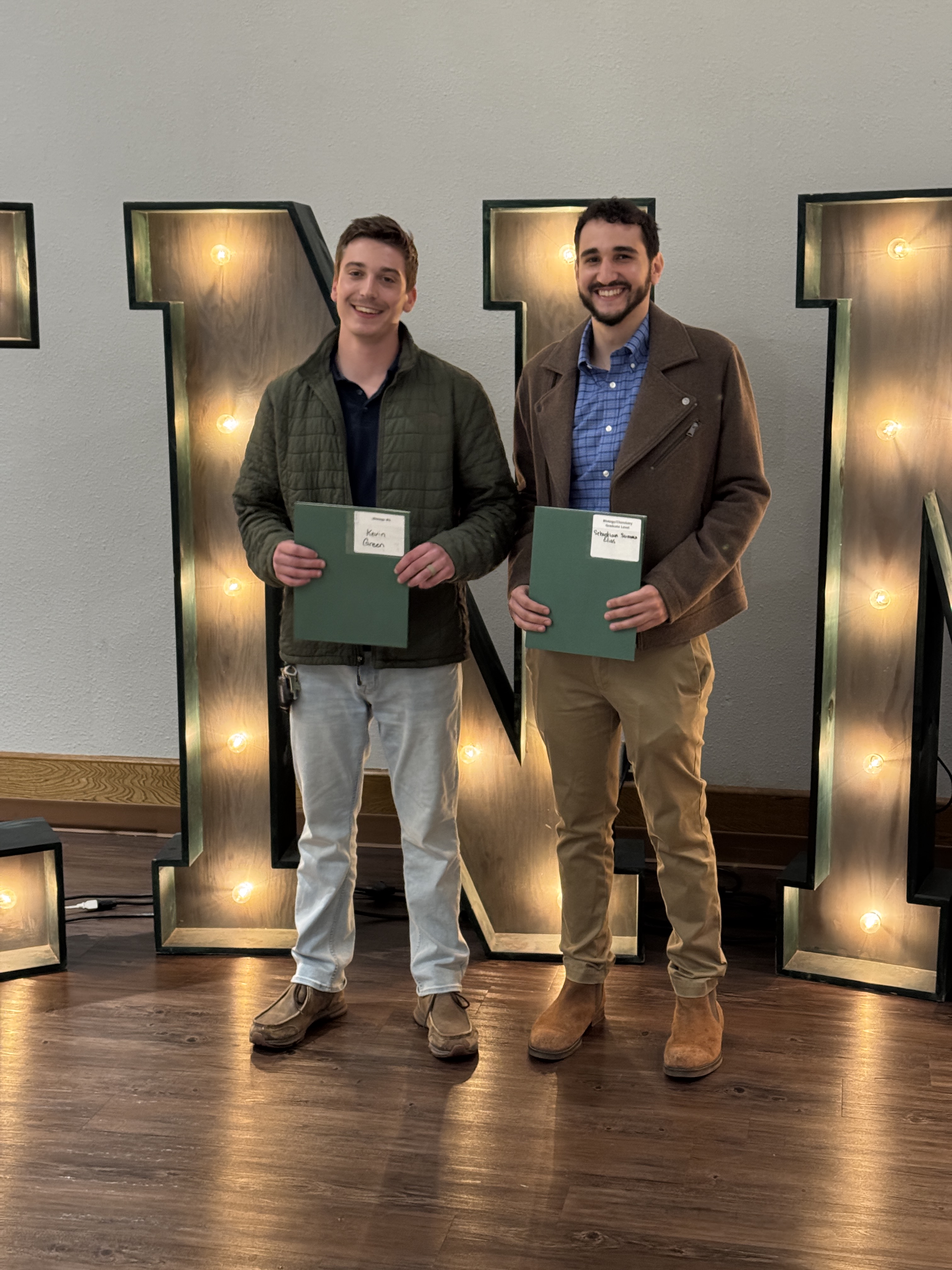 Congratulations to Kevin Green and Sebastian Summo (pictured here) for taking home top prizes in their presentations at the ENMU Student Research and Creativity Conference. Kevin won 1st place among the Biology Undergraduate Posters with his poster titled, “Prevalence of two amphibian pathogens in non-native caecilians established in Miami, Florida,” and his work on this was funded through the NM AMP. Sebastian won 1st place among Biology/Chemistry Oral Presentations his talk titled, “Distribution, habitat use, and conservation ecology of the Western Ribbonsnake (Thamnophis proximus) in New Mexico.” Four other students presented posters related to their current or past work also at SRCC, including Jake Kuschel, Zoe Hutcherson, Reagan Moritomo, and Andy Gilliam.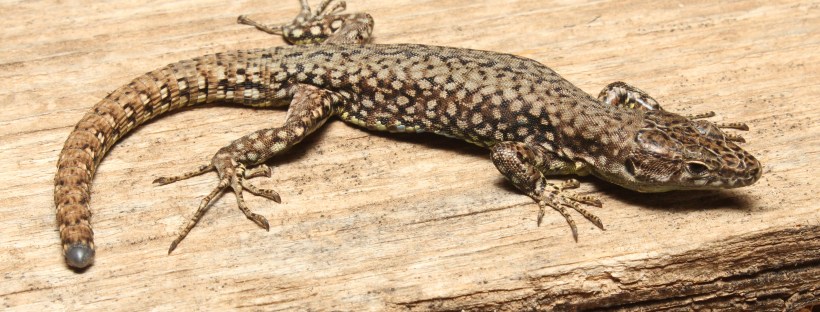
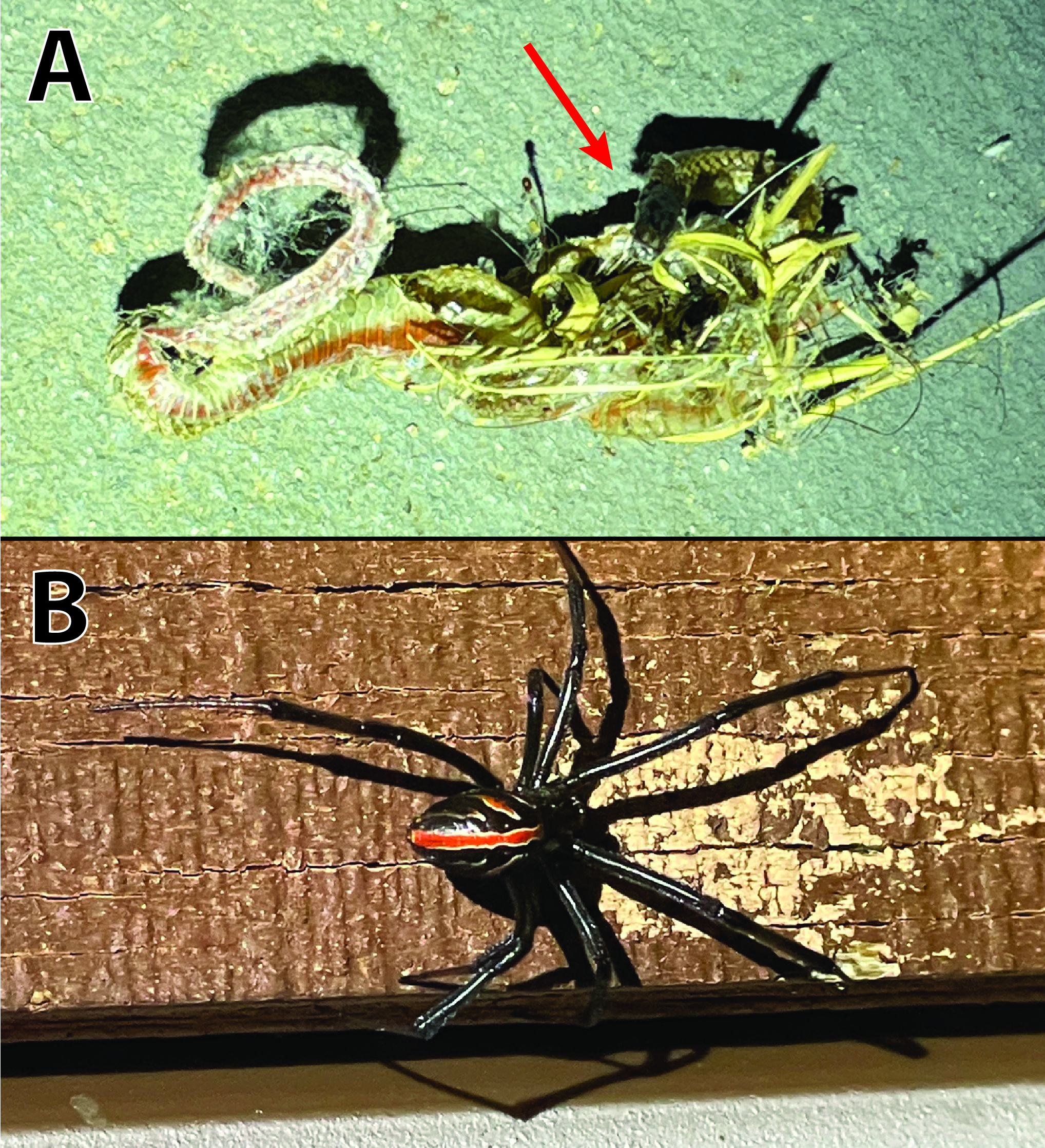
 Five new, short notes were recently published in Herpetological Review, most of which were written by student authors or have students as coauthors. Two of these notes were Natural History Notes documenting a new prey item and scavenging behavior in the Ornate Box Turtle (Terrapene ornata) (Davis and Davis 2024) and a new predator of the Plains Black-headed Snake (Tantilla nigriceps) (Summo Elias and Davis 2024). The other three notes were geographic distribution notes documenting the occurrence of three lizard species in three separate states. The first was a new county where Rough-tailed Geckos (Cyrtopodion scabrum) were found in Texas (Davis and Genter 2024), which only represents the second known county where this species occurs in the state (Davis and Genter 2024). Another note documented new distributional records of Common Wall Lizards (Podarcis muralis) in Indiana, which is also the first time they have been recorded in the state back after they were believed to have been eradicated (Mirtl et al. 2024). The final note was a formal documentation of the widely distributed (and rapidly spreading) Wood Slave (Hemidactylus mabouia) in Orange County, Florida (Summo Elias et al. 2024).
 Summo Elias SD,
  Summo Elias SD, Cuevas-Hernandez J,
 DHL undergraduate student researcher Kevin Green was recently awarded funding from the Texas Academy of Science Annual Student Research Award program. His proposed research, titled “Understanding the distribution and negative effects of recently established invasive Hemidactylus from south Texas,” involves examining the diet and parasites of three non-native species of geckos established in the Rio Grande Valley. He will make trips to the region in spring and fall 2025 to collect samples and continue to better describe the distribution, diet, and parasite load of these species.
 Shell studies of the Sonora Mud Turtle, Kinosternon sonoriense, have been limited except for a description of organisms living on the shell (Hulse 1976a) and a study on individual growth and morphometrics (Hulse 1976b), both involving individuals from Arizona, USA. Shell abnormalities in K. sonoriense were reported by Hulse (1976b) and included round pits up to 3-mm diameter in 26% of the specimens examined and a “corrugated carapace”, apparently due to “uneven deposition of additional bony material in the dermal skeleton” in 9% of the specimens examined. In his earlier paper, Hulse (1976a) reported epizoic algae, including Basicladia (now Arnoldiella) chelonum, on K. sonoriense in Arizona. While Hulse (1976b) noted that this alga could have been responsible for the pits, he rejected that conclusion because he observed many turtles with the algae present that lacked these pits.
 M.S. student Sebastian Summo Elias presented at the annual Joint Annual Meeting (JAM) of the NM/AZ The Wildlife Society Chapters in Albuquerque, NM last week. Sebastian presenting on some of his preliminary results from his field surveys for Western Ribbonsnakes (Thamnophis proximus). While in Albuquerque, the lab also stopped by to visit the ABQBioPark to discuss future collaborations with Stacey Sekscienski (Curator of Herpetology) and visited the Museum of Southwestern Biology at the University of New Mexico to examine specimens related to several on-going projects in the lab on Aspidoscelis, Nerodia, and Thamnophis.
  Undergraduate student researcher Kevin Green was recently awarded funding from the Texas Herpetological Society’s Grants-in-Herpetology program. His proposed research, titled “Understanding the distribution and negative effects of recently established invasive Hemidactylus from south Texas,” involves examining the diet and parasites of three non-native species of geckos established in the Rio Grande Valley. He will make trips to the region in spring and fall 2025 to collect samples and continue to better describe the distribution of these species.
 Jake Kuschel graduated in December 2024 with a degree in Experimental Biology (Zoology) from Michigan State University. As an undergraduate, he worked in a research lab conducting behavioral and physiological experiments involving snakes (
 Zoe Hutcherson has previously been working in the Davis Herpetology Lab as an undergraduate student and graduated with a double major in both Biology and Forensic Science from ENMU in December 2024. Recently, Zoe has been working on summarizing the distribution of the non-native Mediterranean Gecko (Hemidactylus turcicus) across New Mexico.

 Zoe Hutcherson recently won 3rd place in the student poster competition at the New Mexico Research Symposium (hosted by the New Mexico Academy of Science and NM EPSCoR) held in Albuquerque, New Mexico, on 19 October! Her poster was titled “Range expansion of the non-native Mediterranean Gecko (Hemidactylus turcicus) across New Mexico and West Texas.” This follows a recent award at the NM Alliance for Minority Participation. Congratulations on another success Zoe!
 Drew R. Davis, Ph.D.