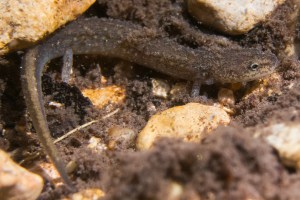
Jollyville Plateau Salamander. Photo by Nathan Bendik.
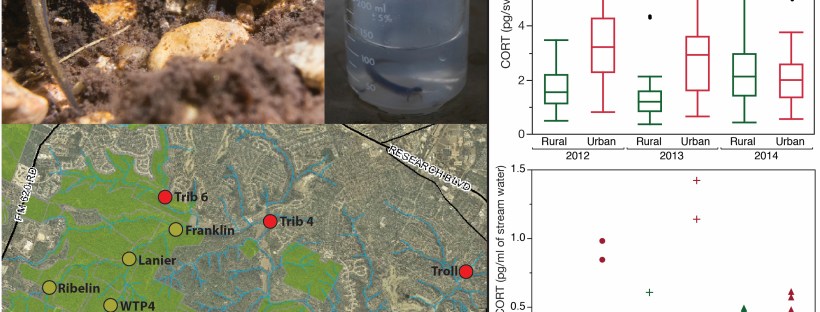
Urbanization has the potential to induce major changes in freshwater systems. Expected increases in human populations will likely amplify these changes and lead to the overall degradation of habitat quality within these systems. Such habitat alterations may function as stressors that can affect glucocorticoid stress hormones in freshwater vertebrates. Examining changes in physiological stress may provide early warning indicators of environmental threats and provide insights into the sub-lethal effects of habitat degradation. The threatened, obligate aquatic, Jollyville Plateau salamander (Eurycea tonkawae) is found in urbanized and rural catchments within central Texas and has experienced population declines in heavily urbanized areas. We tested the prediction that salamanders from urbanized sites would have different levels of baseline corticosterone (CORT) and muted or no stress responsiveness (to an external stressor, agitation) compared to salamanders from rural sites. We collected water-borne hormones to measure baseline CORT release rates (n = 3 years) and stress responsiveness (n = 2 years) in salamanders inhabiting urbanized and rural sites. We also measured “background” CORT from stream water alone at each visit. For the first two years we found that baseline CORT was higher in urbanized sites but not in the third year. Across years and populations, salamanders showed stress responsiveness, suggesting that, even if physiological stress is higher in urbanized areas, it has not resulted in the impairment of the hypothalamic–pituitary–interrenal axis. Background CORT was higher in urban than in rural streams and was positively correlated with mean baseline CORT of salamanders across populations and years. Our results contribute to the goal of finding early warning indicators of environmental threats by demonstrating a relationship between urbanization and the physiological status of E. tonkawae, using a rapid, non-invasive measure of stress.
Gabor CR, Davis DR, Kim DS, Zabierek KC, Bendik NF. 2018. Urbanization is associated with elevated corticosterone in Jollyville Plateau Salamanders. Ecological Indicators 85:229–235. [PDF]
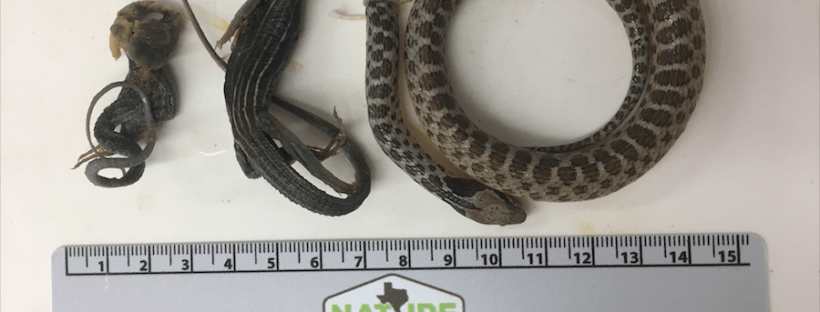
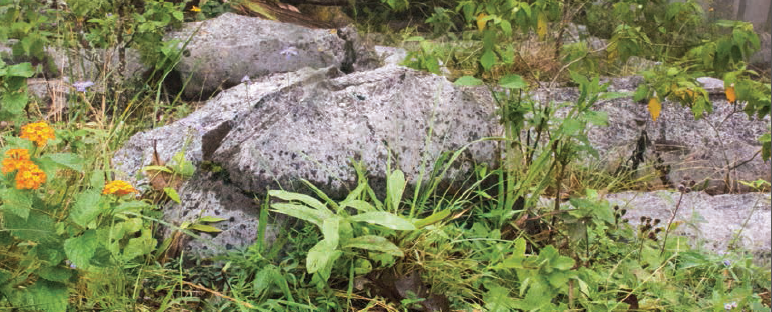
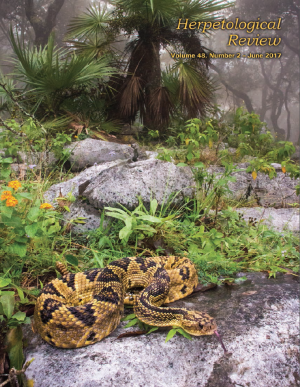
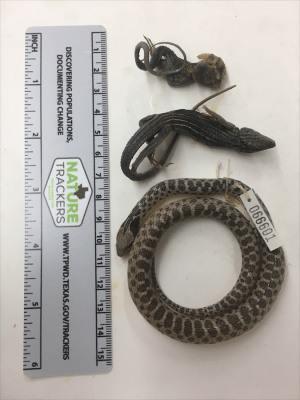 Two natural history notes were published in the June 2017 issue of Herpetological Review. One note reports a new prey item and a new maximum prey/predator mass ratio for the Chihuahuan Nightsnake (Hypsiglena jani) and is co-authored with Travis J. LaDuc. Previously, the maximum prey/predator mass ratio known for Hypsiglena was 0.54 reported by Lacey et al. (1996), but our observation increases the maximum to 0.58. The two prey items that were consumed by this individual were two Little Striped Whiptails (Aspidoscelis inornata). Additionally, this observation adds to the list of prey species known to be consumed by Hypsiglena as only two other species of Aspidoscelis have been reported in the diet of Hypsiglena.
 A new publication documenting the historic
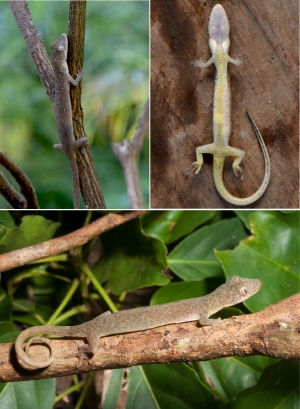 The Philippines possess a remarkable species diversity of amphibians and reptiles, much of which is endemic to this Southeast Asia island nation. Lizard diversity in the family Gekkonidae is no exception, with more than 80% of the country’s gecko species endemic to the archipelago, including the entire genus of False Geckos (Pseudogekko). This small radiation of diminutive, slender, arboreal forest species has been the focus of several recent phylogenetic and systematic studies that have highlighted the prevalence of undocumented species concentrated in several geographical regions within the archipelago. Newly available genetic data have led to the revision of two species complexes in the genus Pseudogekko, one of which is the focus of this study. We describe a new member of the Pseudogekko brevipes complex, which represents the first population from this species group discovered in the Luzon Faunal Region. Because of the species’ secretive nature, rarity, or restricted geographic range, it has gone undetected despite recent biodiversity surveys targeting the central and northern portions of the Bicol Peninsula. We evaluate both morphological and genetic data to support the recognition of the new species. All three members of the P. brevipes complex have allopatric distributions situated within three of the archipelago’s distinct faunal regions. The recognition of the new species increases the total number of taxa in the genus Pseudogekko to nine species.
 I was recently awarded a Wildlife Diversity Small Grant from South Dakota Game, Fish and Parks to promote and develop additional resources for the
  Drew R. Davis, Ph.D.