
 I will be moving my lab and joining the School of Integrative Biological and Chemical Sciences at The University of Texas Rio Grande Valley as an Assistant Professor of Wildlife Biology starting January 2027! This position will be based out of the Brownsville Campus, facilitating collaborations and research at sites such as Sabal Palm Sanctuary, TNC Southmost Preserve, and the Gladys Porter Zoo.
I will be recruiting undergraduate students to join the lab upon arrival in the Spring 2027 semester. Additionally, I will be recruiting a funded M.S. graduate student to join the lab in Fall 2027 to work on a local (south Texas) research project. Check back for a formal position advertisement posted sometime in Fall 2026.
I’ll be excited to be back in Brownsville and part of The University of Texas System!

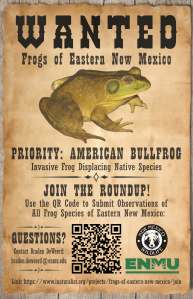 Recent funding from the New Mexico Department of Game and Fish (soon to be Department of Wildlife) included engagement with community scientists to increase observations of frogs across eastern New Mexico. Though primarily aimed to target observations of American Bullfrogs (Rana catesbeiana) along the Pecos River, we are interested in all observations of anurans across the region. American Bullfrogs are considered a non-native, invasive species across most of New Mexico, including along the Pecos River watershed. The only region in the state where American Bullfrogs are native is believed to be in the Canadian River watershed in northeastern New Mexico. Early detection of American Bullfrogs is key to prevent their spread and establishment into new areas and control efforts can help to protect native species from these voracious predators.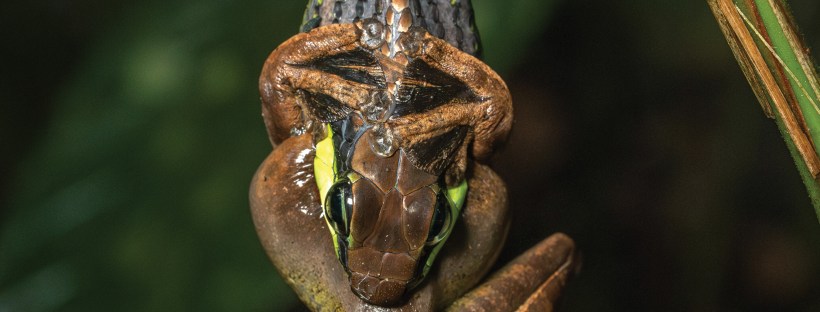
 Two new, short notes were recently published in Herpetological Review, both written by DHL students. One was a Geographic Distribution Note reporting the occurrence of the Mediterranean Gecko (Hemidactylus turcicus) in Chaves County, New Mexico (Hutcherson et al. 2024). The second note was a Natural History Note documenting a predation event on the Cuban Treefrog (Osteopilus septentrionalis) by a nursery web spider (Pisauridae).

 Congratulations to Zoe Hutcherson for winning 1st place at the New Mexico Alliance for Minority Participation Symposium held at New Mexico State University in Las Cruces, New Mexico! Her poster was titled “Range expansion of the non-native Mediterranean Gecko (Hemidactylus turcicus) across New Mexico and West Texas.” Zoe was one of a handful of ENMU students to attend and present alongside other universities across the state. She won a cash prize and an award, but most importantly, gets to claim bragging rights for the next year!
 Additionally, Sebastian Summo Elias was just awarded an ENMU Graduate Student Research Award funds to support research projects. These funds will be used to screen additional snake samples for Snake Fungal Disease.


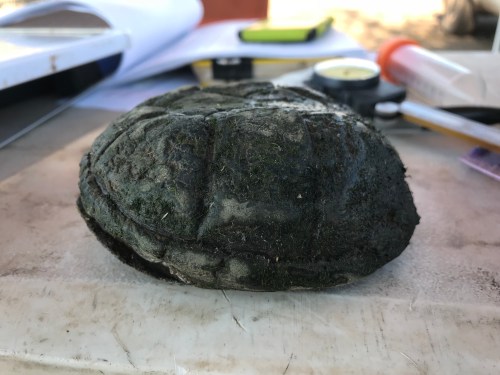
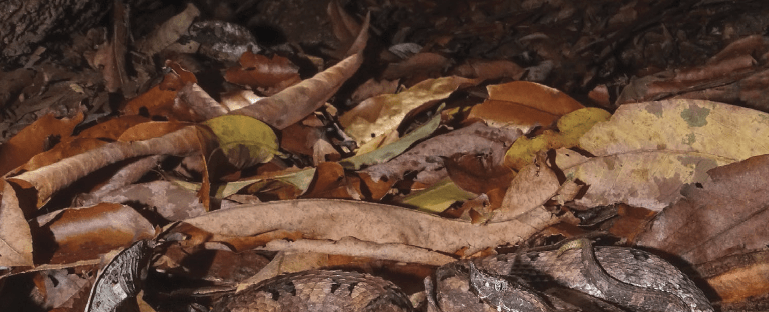
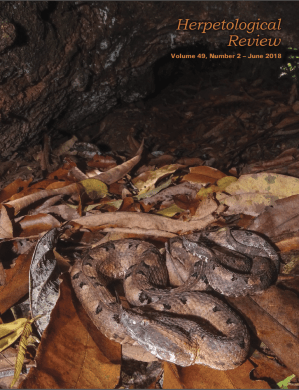 A new publication documenting 54 new distributional records of 17 species of amphibians and reptiles in South Dakota, all collected during 2017, was published in the June 2018 issue of Herpetological Review. Included are numerous records of Boreal Chorus Frogs (n=8) and Painted Turtles (n=8). Also included are six new records of Northern Leopard Frogs, a species for which there is now vouchered material from every county in the state.
 This spring I was asked to write an article about my efforts in mapping amphibians and reptiles across South Dakota. Since 2012, I have collected voucher specimens and photographs of amphibians and reptiles that I encountered at research study sites, during camping trips, driving down county roads, and pretty much every other time I was outdoors when it wasn’t winter. These records represent a significant increase (>60%) in the number of verifiable records from the state and provide much needed voucher material for current and future studies. While I continue to collect voucher specimens from the state, citizen scientists are also contributing to what is known about distributions of species in the state. In 2017, I launched a new website, Amphibians and Reptiles of South Dakota (
