Research
RESEARCH THEMES
APPLIED HERPETOLOGICAL CONSERVATION
 A central tenant in my research is to collect data that can be used to help conserve amphibians, reptiles, and their habitats. My work integrates field ecology, population monitoring, habitat assessment, and modern analytical tools to develop practical, evidence-based conservation strategies. I help generate species detections across the landscape using traditional methods and emerging technology, such as environmental DNA surveys and drone surveys, which can then be used to understand current distributions of species and guide management actions. With occurrence data in hand, conservation measures can be implemented that hopefully enhance individual health, reduce threats and stressors, and support the long-term persistence of populations. This theme reflects our commitment to bridging science and management to conserve herpetological biodiversity.
INTERACTIVE EFFECTS OF MULTIPLE STRESSORS
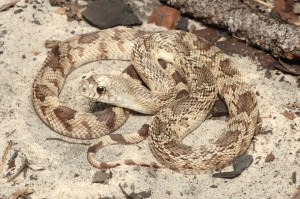 Due to increasing levels of anthropogenic disturbance, it is important to understand how these act as stressors. Anthropogenic disturbances such as habitat modification, contaminants, introduced species, and pathogens are all recognized as stressors that act on individuals and act in combination with natural stressors. The combinations of multiple stressors can have additive, synergistic, or antagonistic effects on organisms. Even if the effects of a particular stressor are known, it may be difficult to anticipate its effects when additional stressors are present. I am interested in investigating the interactions of stressors on native species and using this information to help inform management decisions.
NATURAL HISTORY OF AMPHIBIANS AND REPTILES
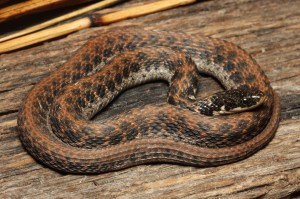 While many people favor “hypothesis-driven” studies, there is a paucity of information about a vast number of amphibian and reptile species. In particular, little is known about species that have limited geographic ranges, are infrequently encountered, or are of conservation concern. Further, many ecological questions can only be fully understood with an intimate knowledge of the species involved, and this foundational information is often lacking. As part of on-going research projects, I seek to increase our understanding of the natural history of these organisms. By documenting basic aspects of behavior, habitat use, and life history, we establish the context necessary for more rigorous ecological and evolutionary inquiry. With increases in our understanding of species’ natural history, we can better manage populations, anticipate responses to environmental change, and develop more effective conservation strategies for species of interest.
INVASION ECOLOGY
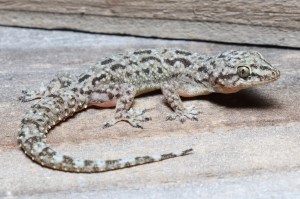 Although introduced amphibians and reptiles are increasingly documented across North America, substantial gaps remain in our understanding of how these species establish, spread, and interact with native ecosystems. Many non-native populations have only been recently detected, and baseline information on their distribution, natural history, and ecological effects is often limited or entirely lacking. As part of ongoing research initiatives, we work to document the occurrence, dispersal pathways, and habitat associations of invasive herpetofauna, with particular emphasis on urban and human-modified landscapes. By establishing foundational data on population status, species interactions, and community impacts, this research provides the framework needed to evaluate invasion dynamics, forecast range expansion, and inform monitoring and management strategies aimed at mitigating ecological consequences.
Current Research PROjects
ASSESSING THE DISTRIBUTION AND THREATS OF SGCN FROGS IN EASTERN NEW MEXICO
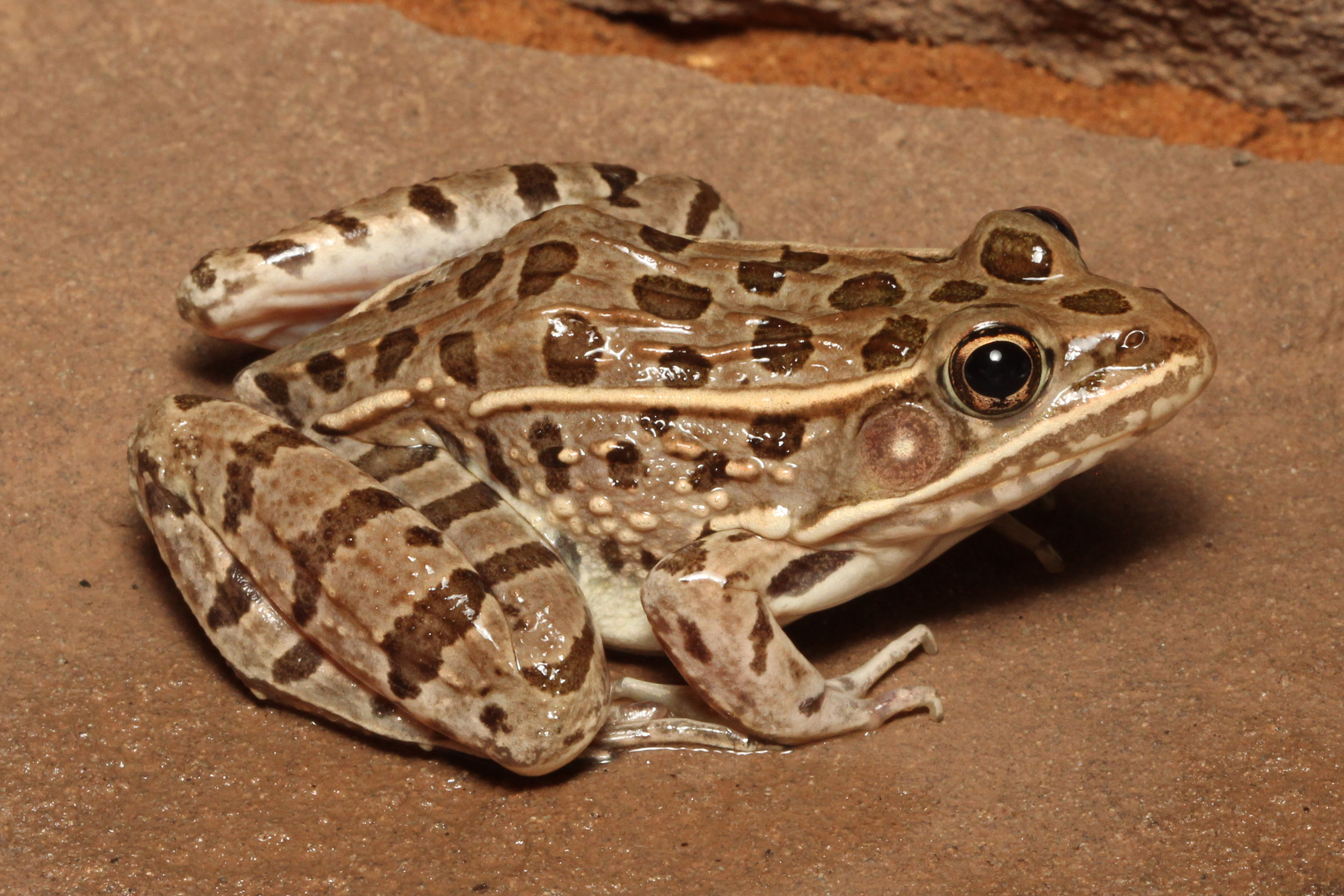
Without updated field data, the current conservation status of Blanchard’s Cricket Frogs (Acris blanchardi), Rio Grande Leopard Frogs (Rana berlandieri), and Plains Leopard Frogs (Rana blairi) remain uncertain. All three anuran species are listed as a SGCN in the New Mexico Department of Game and Fish State Wildlife Action Plan (SWAP), emphasizing the urgent need for updated field data to inform management and conservation actions. Anecdotal reports suggest that these species may have declined in recent years, particularly in areas affected by drought, groundwater depletion, and river management practices. The combined survey and management proposed here will generate contemporary occurrences data for these species and help address the threat and risk posed by invasive American Bullfrogs (Rana catesbeiana). The resulting data will guide effective habitat management, restoration, and species recovery efforts—directly supporting the goals of the New Mexico SWAP and the conservation of biodiversity in the Pecos River basin. Funding provided by the New Mexico Department of Game and Fish.
INCREASING OUR UNDERSTANDING OF THE RIO GRANDE COOTER TO INFORM FUTURE RECOVERY OPTIONS
 There is a paucity of information on the Rio Grande Cooter (Pseudemys gorzugi) given its limited range, recent species designation, and elusive behavior. This overall lack of information on this species of turtle, combined with numerous threats due to climate change and anthropogenic pressures, highlights an urgent need for data and research on this species. Despite not being federally protected in 2022, there is continued support to better understand this species as it continues to face threats to its persistence across its range and future listing petitions seem likely. Recovery options such as reintroductions or translocations, either supplementing declining populations or establishing new populations, may be important conservation strategies to help protect and sustain this species. We propose to conduct a series of studies to help fill in information gaps on the Rio Grande Cooter to help guide species management. Funding provided by the National Fish and Wildlife Foundation, Pecos River Conservation Initiative.
ENVIRONMENTAL DNA SURVEYS FOR NEW MEXICO SNAKES OF CONSERVATION CONCERN
 The Mexican Gartersnake (Thamnophis eques) and the Plain-bellied Watersnake (Nerodia erythrogaster) are two imperiled species in New Mexico with limited recent occurrence records. This project aims to update the known distribution of both species using environmental DNA (eDNA) surveys in the Gila River watershed (for T. eques) and the Lower Pecos River system (for N. erythrogaster). In addition to confirming species presence, this work will help identify habitat characteristics associated with occupancy and inform future monitoring efforts. Species-specific eDNA assays are being developed and validated as part of this research. Funding is provided by the New Mexico Department of Game and Fish through the Share With Wildlife program. Funding provided by the New Mexico Department of Game and Fish, Share With Wildlife Program.
IMPERILED TURTLE SURVEYS IN SOUTHWESTERN INDIANA
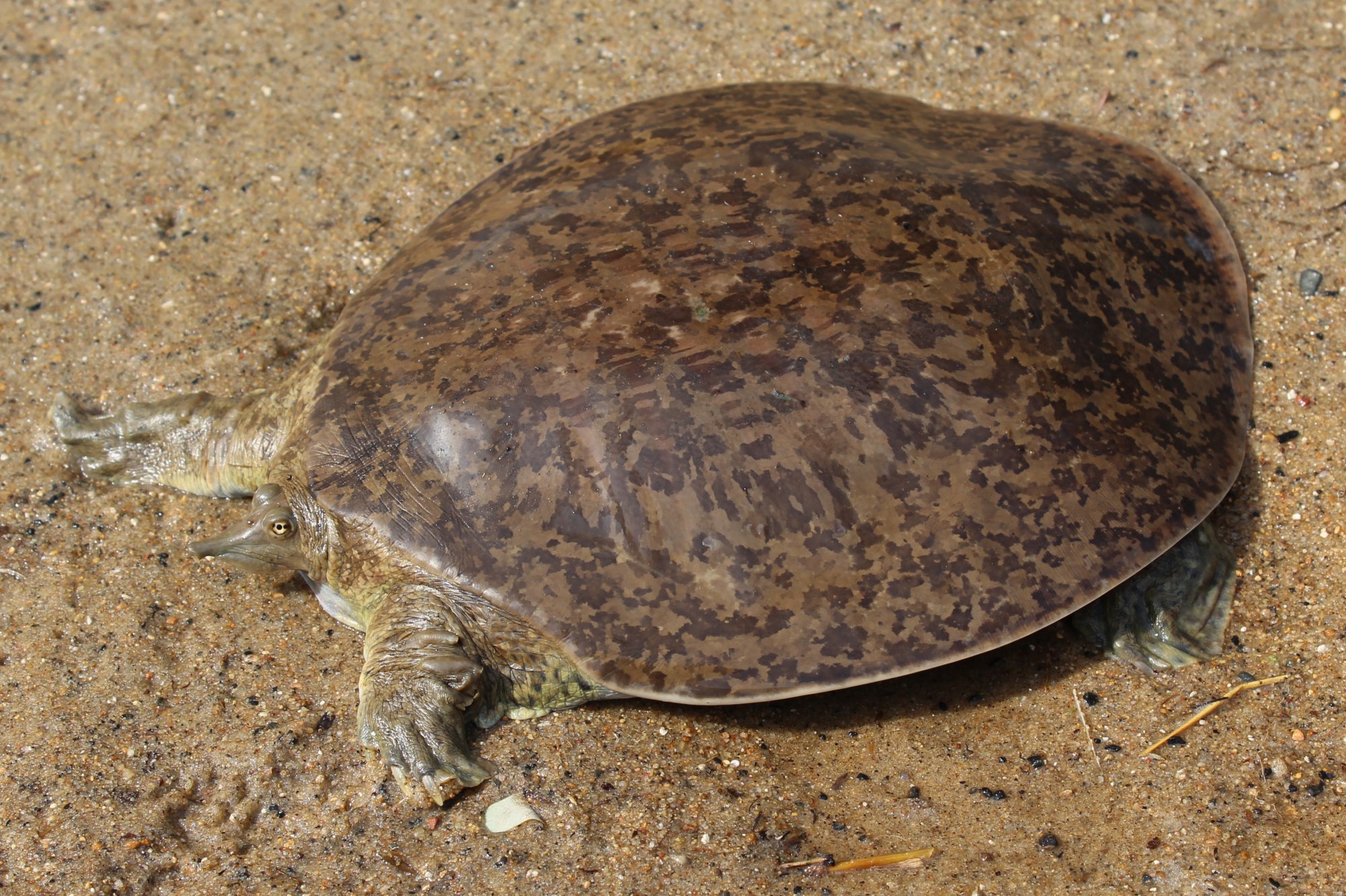 We received funding to conduct visual and trapping surveys for four species of turtles (River Cooters [Pseudemys concinna], False Map Turtles [Graptemys pseudogeographica], Smooth Softshells [Apalone mutica], and Eastern Mud Turtles [Kinosternon subrubrum]) in southwestern Indiana. This research will primarily involve surveys in the Wabash, Ohio, Patoka, and White rivers, as well as their surrounding drainages. Surveys aim to collect data in order to estimate population size and record demographic data on these four focal species, but other turtle species as well. In addition, I will identify quality nesting sites and areas of high species abundance and diversity that may aid in future conservation action. Funding provided by the Indiana Department of Natural Resources, Division of Fish and Wildlife.
WESTERN RIBBONSNAKE DISTRIBUTION AND CONSERVATION IN NEW MEXICO
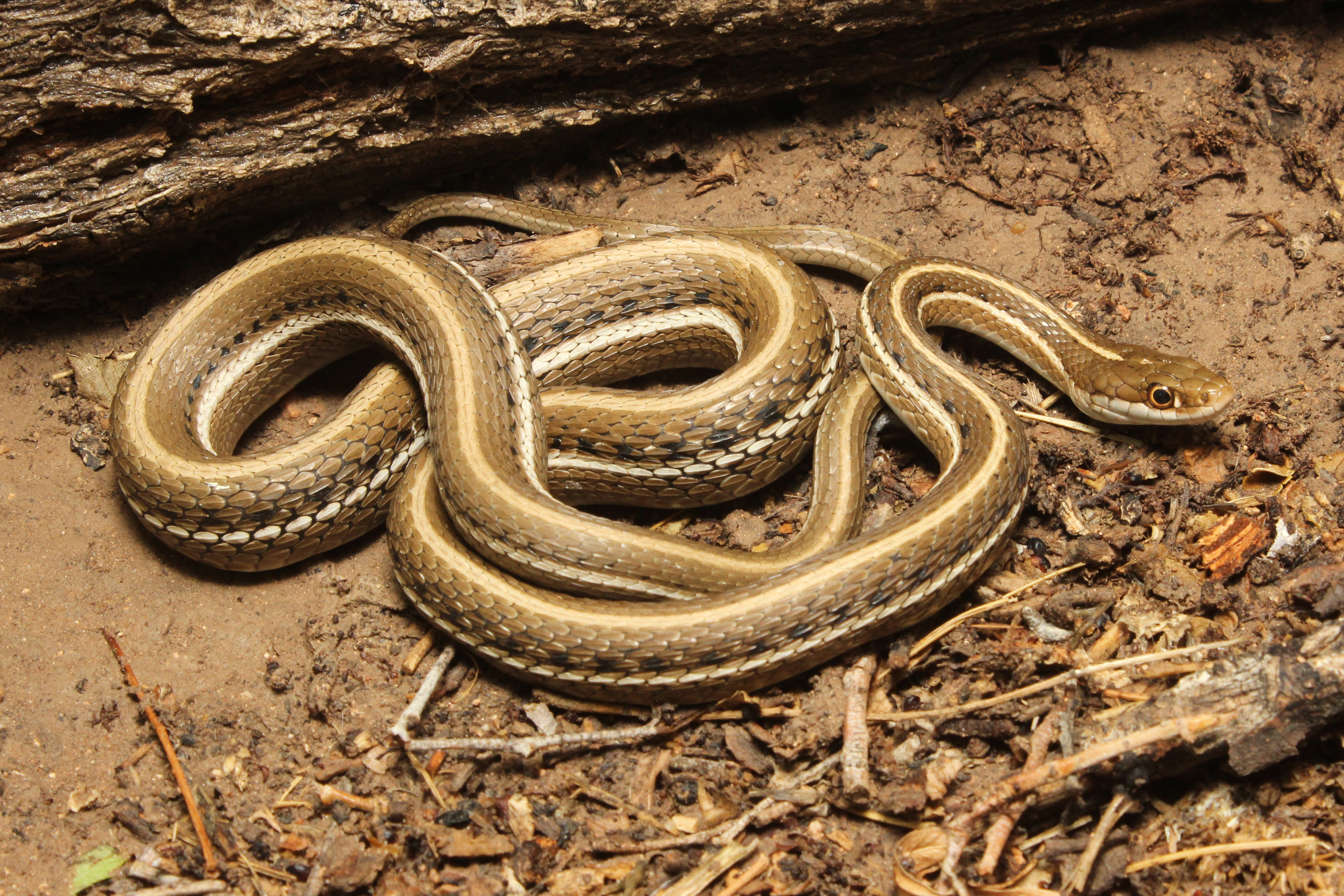
The Western Ribbonsnake (Thamnophis proximus) is a state-threatened species in New Mexico with few historic occurrence records, leaving significant gaps in our understanding of its status within the state. Although the species has been well studied in other portions of its range, it remains poorly understood in New Mexico, where its distribution, habitat associations, and population viability are largely unknown. The primary goal of this research is to update and more fully describe the statewide distribution of the species, as well as to identify habitat features that correlate with occupancy and persistence. In doing so, we aim to provide a clearer picture of where viable populations remain and what environmental conditions support them. Additionally, we are investigating a suite of potential threats, including habitat loss and fragmentation, invasive species, declines in water quality, and the emergence of snake fungal disease. Together, these data will inform management actions and conservation planning for this imperiled species. Funding provided by the New Mexico Department of Game and Fish.
Additional RESEARCH Topics
DISTRIBUTION AND CONSERVATION OF THE BLACK-SPOTTED NEWT

The Black-spotted Newt (Notophthalmus meridionalis) is a candidate species for federal listing by the U.S. Fish and Wildlife Service. Habitat loss and degradation have contributed to the decline of this species and the expansion of urbanization and agriculture may threaten remaining populations. Understanding the current distribution of this species is challenging due to the ephemeral nature of the aquatic habitats used and long periods when this species is underground. We are using environmental DNA (eDNA) assays to survey for this species across their historic distribution in the state, characterizing the habitats they use, and attempting to better understand their threats in order for best management practices to be developed for this species.
NON-NATIVE HEMIDACTYLUS ACROSS THE SOUTHERN USA
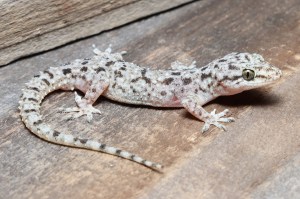
A number of non-native house geckos (genus Hemidactylus) have become established across the southern United States, largely through accidental transport via global commerce and human infrastructure. For example, in Texas, populations of four species of Hemidactylus have been reported in the southern portion of the state. Hemidactylus turcicus has been present in Texas since the early 1950s and is now widespread in urban environments. Hemidactylus mabouia was first documented in 2013, followed by H. garnotii in 2019, and H. aff. malcolmsmithi in 2020. The emergence of these newer introductions highlights an accelerating pattern of reptile invasions linked to increased trade, plant shipments, and the movement of building materials. Unlike the long-established H. turcicus, whose ecology and distribution are relatively well understood, far less is known about the establishment success, dispersal rates, and ecological interactions of these more recently detected species. Ongoing research seeks to document range expansion, identify pathways of introduction, and assess whether niche overlap or competition may occur among co-occurring Hemidactylus or native lizards.
STATUS AND DISTRIBUTION OF THE RIO GRANDE COOTER

The Rio Grande Cooter (Pseudemys gorzugi) was recently denied listing under the U.S. Endangered Species Act by the U.S. Fish and Wildlife Service; however, substantial gaps remain in our understanding of the species’ status, distribution, and ecology. Interest therefore remains high in improving baseline knowledge needed to inform future conservation and management decisions. We are employing novel, noninvasive approaches to census and detect Rio Grande Cooters across their range in the Rio Grande, Pecos River, and associated tributaries in Texas and New Mexico. Specifically, we have integrated drone-based imaging and environmental DNA (eDNA) techniques to survey for the species with considerable success. Our results demonstrate that drone surveys can yield identifiable images of turtles across a wide variety of habitats used by this species, while eDNA sampling has provided important detections in areas where traditional survey methods are challenging. Together, these approaches offer powerful tools for improving distributional data and advancing ecological understanding of P. gorzugi.
DISTRIBUTION AND ECOLOGY OF INTRODUCED MOORISH GECKOS
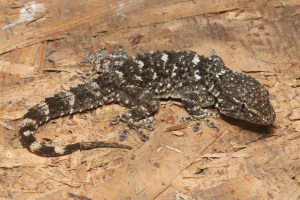
The Moorish Gecko (Tarentola mauritanica), a species native to the western Mediterranean region, has recently been documented as an established, non-native species in Texas. Surveys across Bexar County have recorded multiple individuals across multiple sites, confirming the presence of a self-sustaining, reproducing populations. As in other introduced regions, the Texas population appears closely associated with human-modified environments, suggesting that urban habitats may facilitate establishment and persistence. Given the species’ potential for continued spread, there is a clear need to better understand its ecology in Texas, including diet, habitat use, and parasite load, to evaluate potential interactions with native species and assess possible ecological consequences of its establishment.
CHIHUAHUAN DESERT MUD TURTLE ECOLOGY

I am actively engaged in several research projects examining multiple facets of the ecology of the Yellow Mud Turtle (Kinosternon flavescens) in the Chihuahuan Desert of west Texas. On the C. E. Miller Ranch, we have been investigating population demographics, growth rates, movement patterns, phenology, and the emergence of a novel shell disease affecting these turtles. Historically, Yellow Mud Turtles relied on ephemeral pools that formed briefly following summer rains; once these sites dried, individuals returned to upland terrestrial habitats and remained dormant for extended periods. The widespread presence of permanent, well-filled cattle ponds has altered this natural cycle, allowing turtles to remain aquatic for much longer durations. This shift in habitat use appears to influence growth trajectories and has been linked to the development and progression of an algae-mediated shell disease. By examining how anthropogenic changes to hydrology reshape life-history patterns and disease dynamics, this work provides insight into the unintended ecological consequences of landscape modification in arid environments.
WALL LIZARD SPREAD ACROSS THE MIDWESTERN USA
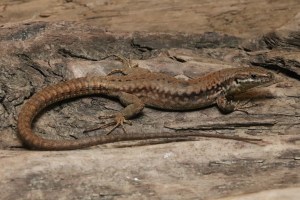 The Common Wall Lizard (Podarcis muralis) is a highly adaptable European species that has established introduced populations beyond its native range, including parts of the United States. In North America, the species is best known from the Cincinnati, Ohio area, where it was introduced in the early 1950s and subsequently expanded through portions of Ohio and northern Kentucky. Although a small population was discovered in southern Indiana in 2004 and targeted for eradication, the species was not observed there for more than a decade, suggesting initial management efforts may have been successful. However, in July 2023, multiple populations were documented along the Ohio River in southeastern Indiana, marking the species’ reappearance in the state. These discoveries prompted broader surveys that revealed additional colonies and demonstrated ongoing spread along riverine corridors. This work documents the current distribution of P. muralis in Indiana and provides new information on its population characteristics, habitat use, and colonization patterns.
AMPHIBIAN DISEASES
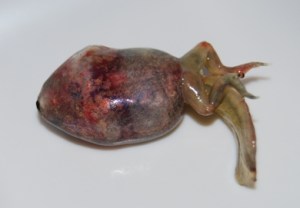
Emerging infectious diseases, including chytridiomycosis (caused by the fungal pathogen Batrachochytrium dendrobatidis) and ranavirosis, are among the most significant drivers of global amphibian declines. While their lethal effects are well documented, far less is known about the sub-lethal consequences of infection, such as behavioral alterations, reduced growth, and delayed development, which may also have profound population-level impacts. I am particularly interested in how these pathogens influence both organismal performance and the stress hormone responses of infected individuals, providing a physiological lens through which to assess disease impacts. I have conducted surveys for these pathogens across the central United States and employ a combination of field-based and experimental approaches to better characterize their ecological and physiological effects on amphibians. In addition, I have expanded my involvement in international efforts to screen amphibian populations in southeast Asia, contributing to a broader understanding of disease distribution and risk in regions of exceptionally high amphibian diversity.
PHILIPPINE AMPHIBIAN AND REPTILE DIVERSITY
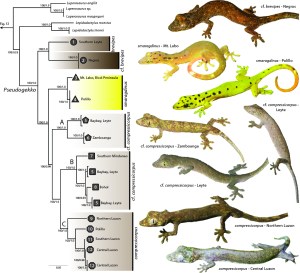
The Philippines harbors an extraordinary diversity of amphibians and reptiles, with the majority—approximately 75%—being endemic to this island archipelago. In recent years, studies of the region’s terrestrial biodiversity have dramatically increased the number of recognized species, often through the discovery of deeply divergent genetic lineages. Taxa once thought to have broad distributions spanning multiple faunal regions are now understood to represent complexes of morphologically similar but evolutionarily distinct species, each typically restricted to a particular island group or biogeographic region. This emerging pattern highlights both the hidden diversity of the archipelago and the importance of fine-scale geographic structure in shaping evolutionary trajectories. I have been collaborating with regional and international researchers to document this remarkable biodiversity and to resolve long-standing taxonomic uncertainties using newly collected morphological and molecular datasets. Two focal genera in this work are Brachymeles (Scincidae) and Pseudogekko (Gekkonidae), which exemplify the extent of cryptic diversity and the need for integrative approaches to species delimitation in Southeast Asia.
VARIATION AMONG WESTERN SLIMY SALAMANDER POPULATIONS

The Western Slimy Salamander (Plethodon albagula) is recognized as having two disjunct ranges, one on the Edwards Plateau of Central Texas and the other within the Interior Highlands of Missouri, Oklahoma, and Arkansas. Morphological and genetic variation has been found within the Edwards Plateau among several different lineages, though less is known about the Interior Highlands population. Currently, I am examining both morphological and genetic variation within the Interior Highlands populations and between these two broadly distributed populations, and plan to expand these studies to include ecological perspectives.
EFFECTS OF AGRICULTURAL TILE DRAINAGE ON SPECIES AND HABITATS
 Throughout the Midwest, agricultural contaminants are pervasive in wetlands and are believed to contribute, at least in part, to regional amphibian declines. A key local factor driving elevated contaminant levels in these systems is the widespread use of agricultural tile drains. These subsurface drainage networks enhance crop production by removing excess water and salts from fields; however, they also serve as efficient conduits for transporting pesticides, fertilizers, and metals directly into adjacent wetlands. As a result, receiving waters may experience contaminant concentrations that exceed established benchmarks for the protection of aquatic life. Much of my dissertation research is dedicated to examining the effects of tile drain effluent on water quality, wetland habitat condition, and wetland-dependent taxa, including amphibians and aquatic invertebrates. By linking agricultural infrastructure to ecological responses, this work seeks to identify mechanisms of impact and inform management strategies that balance agricultural productivity with the conservation of vulnerable wetland ecosystems.
DISTRIBUTIONS OF AMPHIBIANS AND REPTILES IN SOUTH DAKOTA

Current understanding of the distributions of amphibians and reptiles in South Dakota remains limited compared to that of many other vertebrate groups in the state. Ongoing increases in human population, conversion of native grasslands to agriculture, and widespread habitat degradation likely exert strong negative pressures on South Dakota’s herpetofauna. However, the magnitude and spatial extent of these impacts are difficult to assess because of sparse historic records and uneven modern sampling. To address this gap, I am working to update the known distributions of all amphibian and reptile species in South Dakota. As part of this effort, I have compiled a comprehensive database of more than 14,400 museum and observational records, allowing for a much finer-scale mapping of species occurrences across the state. These data provide a critical baseline for identifying areas of conservation priority, detecting range shifts, and guiding future survey and management efforts. For additional information on this project, visit: www.sdherps.org.
OCCURRENCE OF FALSE MAP TURTLES IN SOUTH DAKOTA

From 2017–2020, I was involved in survey efforts to assess the status of False Map Turtles (Graptemys pseudogeographica) in South Dakota. Our primary objective was to determine whether this species persists in Lake Oahe, a large reservoir along the Missouri River north of Pierre. The damming of the Missouri River and the creation of expansive reservoirs have fundamentally altered riverine habitats, resulting in widespread habitat degradation and loss and likely the extirpation of this species from much of its historic range. Through targeted surveys, we are evaluating both presence and relative abundance across reservoir and riverine habitats. Initial results indicate that False Map Turtles are extirpated from most of Lake Oahe; however, populations remain abundant in free-flowing, more natural segments of the Missouri River. Notably, the species persists at high densities within the 59-mile Missouri National Recreational River stretch from Yankton, South Dakota, to Sioux City, Iowa. These findings underscore the importance of maintaining natural riverine systems for the conservation of species adapted to flowing-water environments.
PREDATOR-PREY INTERACTIONS IN AQUATIC AMPHIBIANS
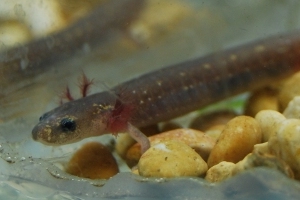
Predation is a dominant force structuring ecological communities, shaping behavior, life histories, and population dynamics across taxa. The introduction of novel predatory fish into aquatic systems has been particularly problematic, leading to widespread and often rapid declines in amphibian populations. I am broadly interested in how amphibians respond to these novel predators and in the sensory modalities that mediate such interactions, including chemical, visual, and tactile cues. Of particular interest is the balance between innate and learned predator recognition, as well as the extent to which predator generalization influences an organism’s ability to identify and respond appropriately to unfamiliar threats. Understanding these processes is critical for predicting which species are most vulnerable to invasion and for designing effective conservation interventions. The majority of my work addressing these questions has focused on fully aquatic Eurycea salamanders of central Texas, many of which are highly endemic and are listed as state- and federally protected species, making them both ecologically informative and conservation relevant study systems.
STRESS PHYSIOLOGY
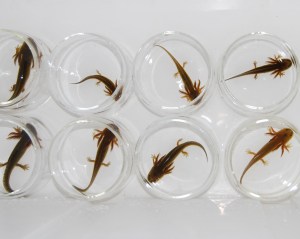
Both natural and anthropogenic stressors are known to influence stress hormone production in amphibians, with important consequences for behavior, physiology, and survival. Traditionally, these hormones have been measured through plasma collection or whole-body assays, approaches that can be invasive or impractical for small or imperiled species. More recently, non-invasive alternatives such as urinary sampling have been developed. I have helped to advance novel methods for collecting water-borne hormones from small aquatic salamanders and am using these techniques to assess stress at both individual and population scales. In the laboratory, these methods allow for controlled comparisons of individual responses to specific stressors, while in field settings they facilitate population-level assessments of large-scale habitat disturbance. Ongoing projects examine how urbanization, agricultural development, predators, contaminants, and disease influence stress hormone levels, providing insight into how environmental change translates into physiological stress and, ultimately, conservation risk.

 Drew R. Davis, Ph.D.