
 I was recently awarded a Wildlife Diversity Small Grant from South Dakota Game, Fish and Parks to promote and develop additional resources for the newly launched website www.sdherps.org. These funds were awarded to me and partners at HerpMapper, Inc. to promote the use of this website, increase public awareness of this resource, and encourage user-submitted observations of amphibians and reptiles from across the state. An additional goal will be to travel to the University of Nebraska State Museum (UNSM) in Lincoln, NE to examine and verify species identifications of voucher specimens that were formerly part of the University of South Dakota Herpetological Collection. The collection at UNSM represents the largest collection of amphibians and reptiles from South Dakota and represents a large portion of the data used to map species distributions (see www.sdherps.org/about). I am particularly interested in examining similar species pairs (i.e., Plains Leopard Frog vs. Northern Leopard Frog, Plains Gartersnake vs. Common Gartersnake) and rare species (i.e., Common Watersnake, Dekay’s Brownsnake).
Grant Title: Creating online resources to engage South Dakota citizens in amphibians and reptile identification and conservation

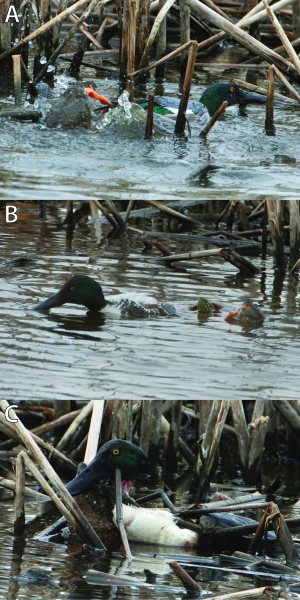 A natural history note describing a new prey item of Snapping Turtles (Chelydra serpentina) was published in the March 2017 issue of Herpetological Review. My co-author,
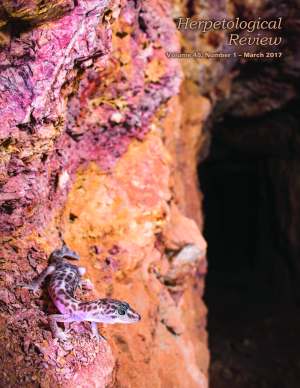 Four new publications documenting the distributions of amphibians and reptiles in South Dakota and Michigan were just published in the March 2017 issue of Herpetological Review. Three of these notes are individual distribution records (2 in South Dakota, 1 in Michigan) and one is a series of 26 county records from South Dakota collected during field work in 2015 and 2016. These South Dakota records have been added to the
 As part of a collaborative effort with the Siler Lab at the University of Oklahoma, I have been involved in efforts to help screen amphibian skin swabs for the pathogenic fungus, Batrachochytrium dendrobatidis (Bd). This manuscript presents the results of pathogen surveys conducted during 2015 in eight counties in southeastern Oklahoma. Overall Bd prevalence was 64.8% and all families swabbed and 15 (of the 18) species of amphibians had individuals that were Bd+. Given the high Bd prevalence and widespread occurrence of Bd across species and sites, this pathogen has the potential to have profound negative impacts on native Oklahoma amphibians.
 I was recently awarded funding by
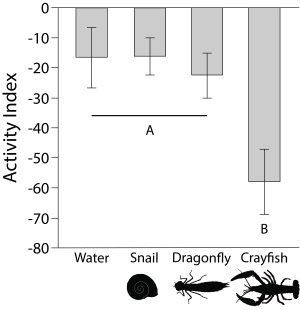 The Barton Springs Salamander, Eurycea sosorum, is a fully aquatic salamander found in Barton Springs in Texas, USA, and has benefited from habitat restoration efforts. While important to improve overall habitat quality for this imperiled species, current management and restoration practices may also inadvertently increase the abundance of non-target organisms such as predatory invertebrates. Fish represent major predators of this species, but little is known about the role of invertebrates as potential predators. It is important to understand the role of these aquatic invertebrates as predators of E. sosorum, especially if habitat restoration also increases predator abundance. Using adult, predator-naive salamanders, we examined the antipredator response of E. sosorum to chemical cues from the following treatments: crayfish, dragonfly larvae, snails, and water. Salamanders decreased activity (antipredator behavior) only in response to the crayfish treatment. The responses to dragonfly larvae, snails, and water did not differ, suggesting that dragonfly larvae are not perceived as predators by these salamanders. Our study provides preliminary evidence suggesting that habitat restoration has unexpectedly increased crayfish abundance, which in turn may negatively affect E. sosorum, and that future management strategies should consider crayfish removal if salamander abundances decline with increasing crayfish abundance.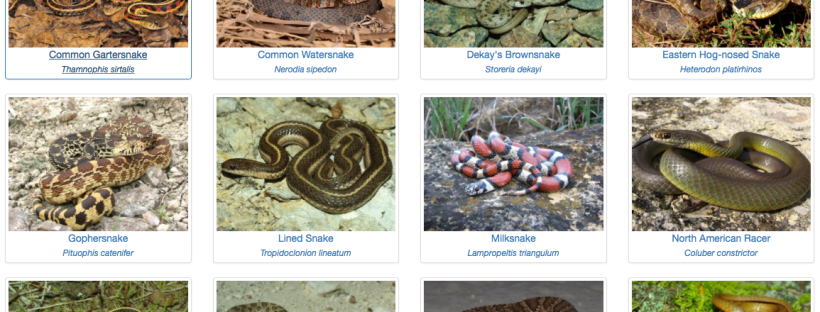
 A new website on the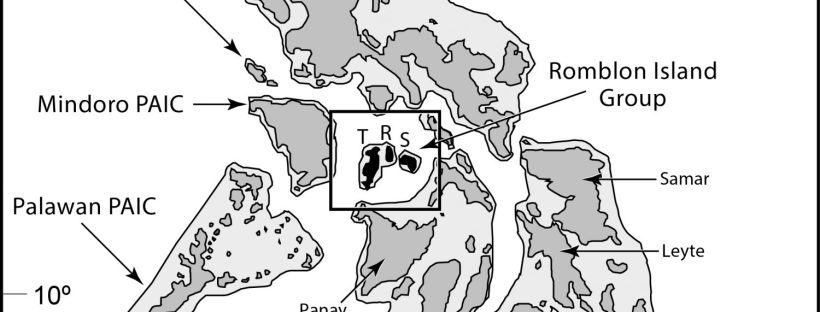
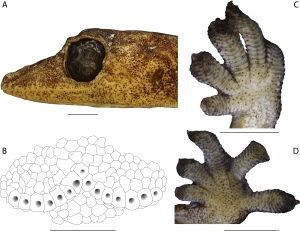 We describe a new species of lizard in the genus Pseudogekko from Sibuyan and Tablas islands in the Romblon Island Group of the central Philippines. The new species is diagnosed from other Philippine Pseudogekko by body size and shape, color pattern, and multiple differences in scale characteristics. Pseudogekko isapa sp. nov. has been collected only twice from leaves of shrubs in forested habitat on Sibuyan and Tablas islands. The distinctive new species of false gecko is undoubtedly endemic to this single, isolated island group. The fact that populations of such a distinctive new species of Pseudogekko has escaped notice of herpetologists on the reasonably well-studied and largely protected Sibuyan Island further emphasizes the secretive and forest-dependent habits of Philippine false geckos. These characteristics of their behavior and natural history render them difficult to study and challenge biologists’ efforts to accurately assess their conservation status.
 Drew R. Davis, Ph.D.