 Texas Tortoises (Gopherus berlandieri) are understudied compared to federally protected congeners. Despite important early studies on the basic ecology of G. berlandieri, quantitative identification of habitat associations with specific environmental conditions has been limited. Gopherus berlandieri inhabits Tamaulipan thornscrub across its range, and coastal populations are historically associated with low-relief clay ridges with thick mesquital scrub surrounded by salt prairie grasslands. Our study examined tortoise home range size and association with canopy cover and potential ground moisture at a protected natural area in Cameron County, TX, USA. Twelve tortoises were outfitted with GPS loggers that recorded location once an hour from March 2020 to March 2022. To delineate home ranges, we estimated utilization distributions (UDs) for tortoises as autocorrelated kernel density estimates (AKDEs) at low-use (95%) and core-use (50%) levels for each tortoise. UDs were estimated for the entire study period and during seasons of sustained heat or cold to determine if tortoises used space differently across these seasons over the study period. Applying a use-availability study design, we compared canopy cover and potential mesic ground condition (i.e., precipitation flow accumulation) within each tortoise’s UD (‘‘use’’) to the area within 1 day’s movement around the boundary of the UD (‘‘available’’). Tortoise UD sizes were significantly different across seasons for low-use (95%) but not for core-use (50%) AKDE levels. Tortoise UDs had greater canopy cover compared to available-but-unused areas at both AKDE levels. Potential mesic ground condition did not significantly differ between available and used areas. Our study revealed that tortoises vary the size of their home ranges throughout the year, whereas areas of intensive use or occupation tended to remain remarkably stable throughout the year. In seasons of extreme weather (hot or cold), tortoises seem to seek out areas of denser canopy cover that likely serve as thermal refugia. Based on our results, effective habitat identification may best be served by ensuring that canopy cover is at least equivalent to the values reported here to ensure sufficient refugia during extreme seasonal temperatures.
Guerra DA, Esque TC, Davis DR, Veech JA. 2025. Home range, seasonality, and the importance of canopy cover for Texas tortoises (Gopherus berlandieri). Herpetologica 81:224–235. [PDF]
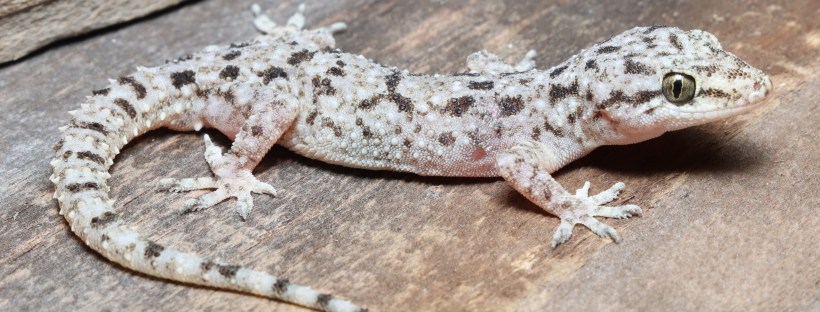
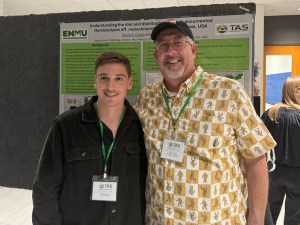 DHL M.S. student Kevin Green recently presented at the Texas Academy of Science Annual Meeting held on the UT Tyler Campus in Tyler, Texas. Kevin presented a research poster titled, “Understanding the diet and distribution of newly documented Hemidactylus aff. malcolmsmithi from south Texas, USA.” This was research he began as an ENMU undergraduate, which focused on examining the distribution and diet of a recently established non-native gecko in Texas. Through this work, Kevin was able to document this species in five new counties in south Texas and recorded 13 orders of arthropods in the diet of over 150 individuals. He previously was awarded funding as an undergraduate from the Texas Academy of Science to conduct this research and he was able to return to present his results at the conference. We also were able to visit with DHL collaborator and Curator of Herpetology at The University of Texas at Austin Biodiversity Collections, Travis LaDuc (pictured with Kevin), which is always a fun time!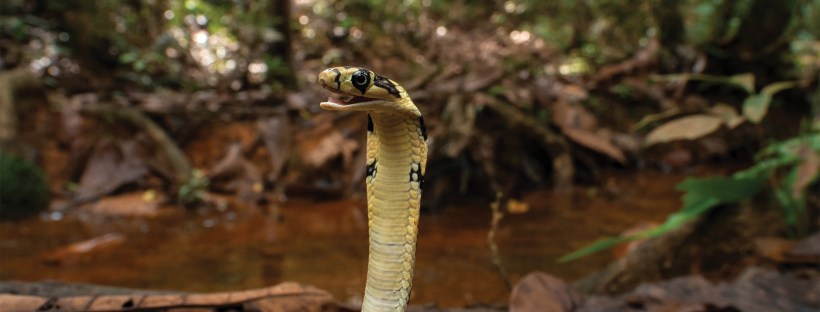
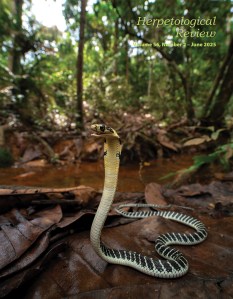 Two new student-led notes were recently published in Herpetological Review 56(2). Both were natural history notes, documenting new diet items for two species. Undergraduate technician Caden Myers published an observation of an Ornate Box Turtle (Terrapene ornata) scavenging a road-killed North American Racer (Coluber constrictor) in Colorado. This observation follows a separate, recently published observation of a T. ornata consuming a road-killed Gophersnake (Pituophis catenifer) in eastern New Mexico. These observations suggest that T. ornata may scavenge road-killed snakes at a higher frequency than previously reported.
 An article was just published by the ENMU Office of Advancement and Public Relations featuring DHL M.S. student Sebastian Summo Elias. It provides a brief biography, introduces his thesis research at ENMU on Western Ribbonsnakes, and mentions some of his recent accomplishments.
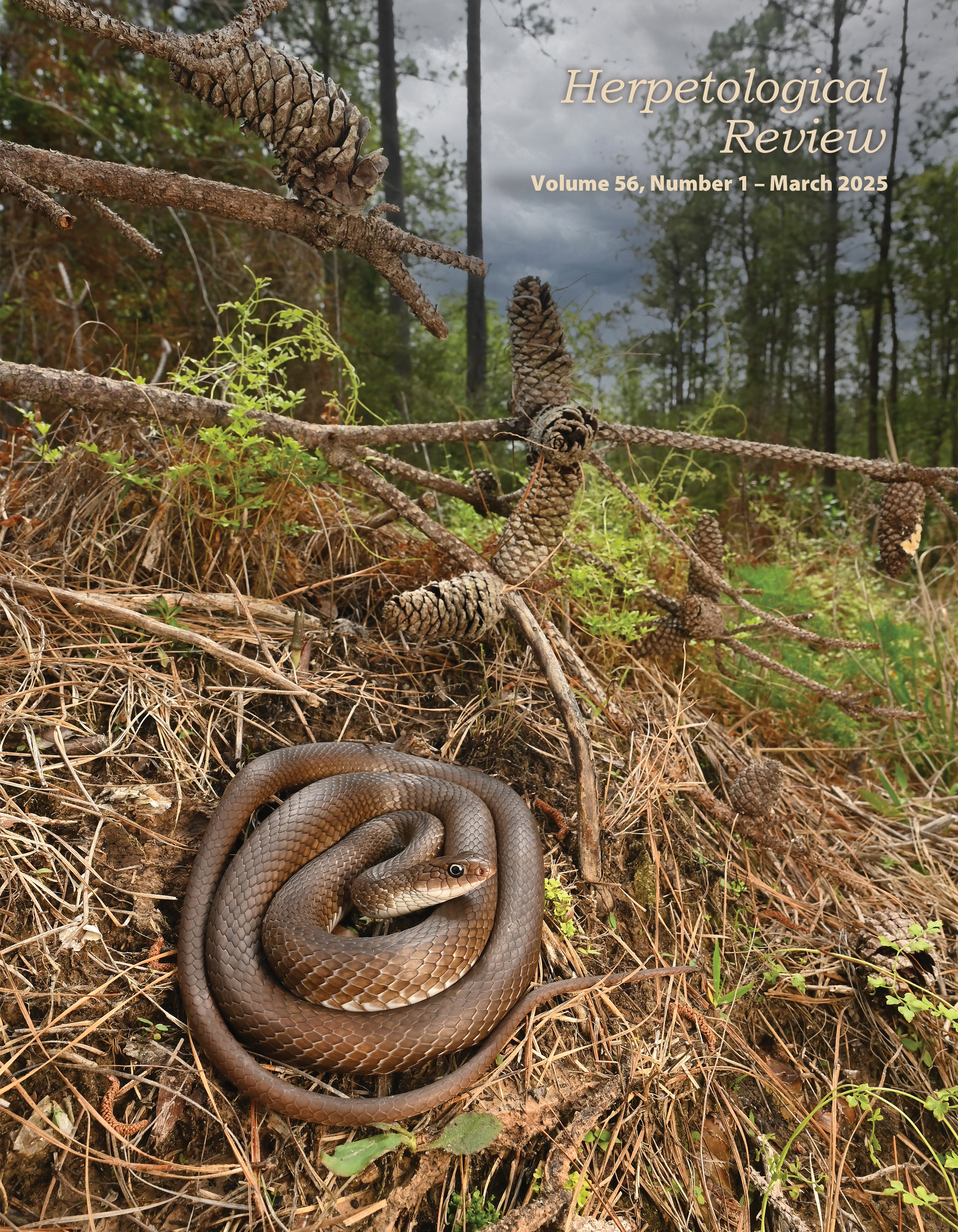 Three new student-led notes were recently published in Herpetological Review 56(1). One was a Geographic Distribution Note reporting seven new occurrence records of six species of Michigan amphibians and reptiles, and was written by M.S. student Jake Kuschel. The other two were notes written by Ben Genter, an undergraduate researcher in the lab. Ben’s notes were: 1) a batch of distributional records of non-native amphibians and reptiles in the Florida, and 2) a Natural History Note describing a predation where at Mexican Treefrog (Smilisca baudinii) had consumed a Mediterranean Gecko (Hemidactylus turcicus) in south Texas. Congratulations to both students on their publications!


 Graduate student Zoe Hutcherson recently attending the New Mexico Research Symposium (NMRS) held in Albuquerque, New Mexico on 15 November 2025. Zoe presented a poster titled, “Understanding the distribution of Rio Grande Cooters and examining spatial variation in their bacterial microbiota” at NMRS and was awarded the second place for her poster. This research is a part of Zoe’s thesis research at ENMU. This is the second time Zoe has won an award at NMRS! Way to go!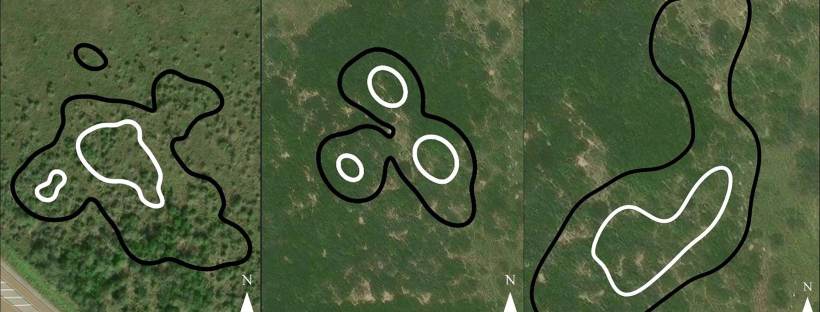

 DHL undergraduate student researcher Caden Myers was recently awarded the SnakeDays 2025 Grant! His proposed research, titled “Diet and parasites of the non-native Moorish Gecko (Tarentola mauritanica) in Texas,”
 The Davis Herpetology Lab attended the recent Southwest Partners in Amphibian and Reptile Conservation (SWPARC) meeting held at the University of New Mexico in Albuquerque from 7-10 August 2025. Not only did u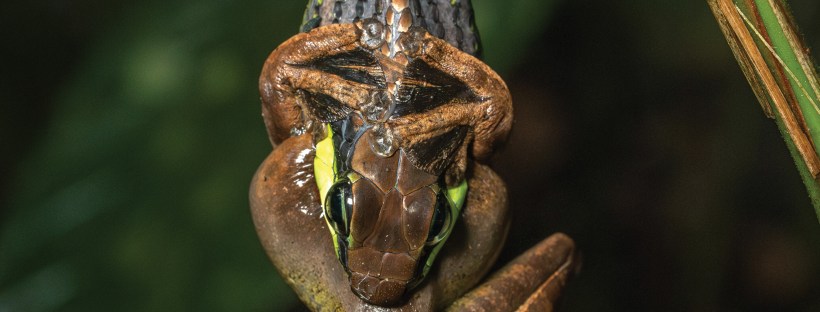
 Two new, short notes were recently published in Herpetological Review, both written by DHL students. One was a Geographic Distribution Note reporting the occurrence of the Mediterranean Gecko (Hemidactylus turcicus) in Chaves County, New Mexico (Hutcherson et al. 2024). The second note was a Natural History Note documenting a predation event on the Cuban Treefrog (Osteopilus septentrionalis) by a nursery web spider (Pisauridae).
 Drew R. Davis, Ph.D.