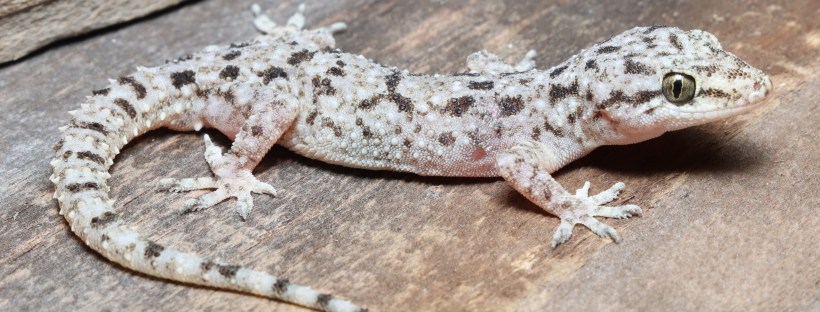
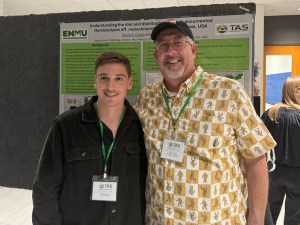
 DHL M.S. student Kevin Green recently presented at the Texas Academy of Science Annual Meeting held on the UT Tyler Campus in Tyler, Texas. Kevin presented a research poster titled, “Understanding the diet and distribution of newly documented Hemidactylus aff. malcolmsmithi from south Texas, USA.” This was research he began as an ENMU undergraduate, which focused on examining the distribution and diet of a recently established non-native gecko in Texas. Through this work, Kevin was able to document this species in five new counties in south Texas and recorded 13 orders of arthropods in the diet of over 150 individuals. He previously was awarded funding as an undergraduate from the Texas Academy of Science to conduct this research and he was able to return to present his results at the conference. We also were able to visit with DHL collaborator and Curator of Herpetology at The University of Texas at Austin Biodiversity Collections, Travis LaDuc (pictured with Kevin), which is always a fun time!
Congratulations to Kevin for a great poster presentation!
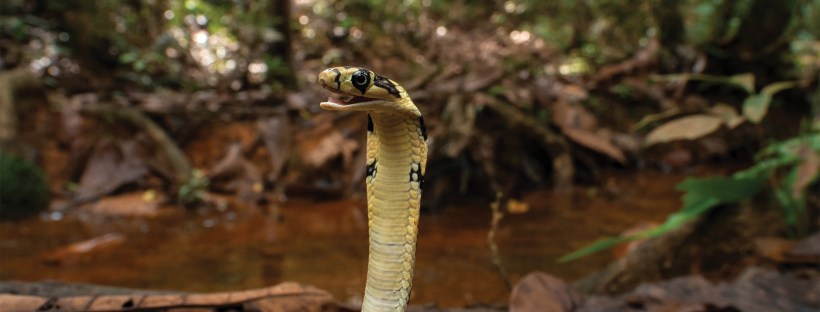
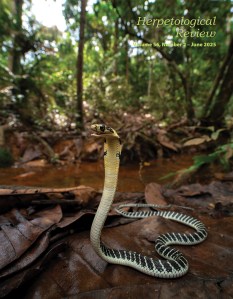 Two new student-led notes were recently published in Herpetological Review 56(2). Both were natural history notes, documenting new diet items for two species. Undergraduate technician Caden Myers published an observation of an Ornate Box Turtle (Terrapene ornata) scavenging a road-killed North American Racer (Coluber constrictor) in Colorado. This observation follows a separate, recently published observation of a T. ornata consuming a road-killed Gophersnake (Pituophis catenifer) in eastern New Mexico. These observations suggest that T. ornata may scavenge road-killed snakes at a higher frequency than previously reported.
 An article was just published by the ENMU Office of Advancement and Public Relations featuring DHL M.S. student Sebastian Summo Elias. It provides a brief biography, introduces his thesis research at ENMU on Western Ribbonsnakes, and mentions some of his recent accomplishments.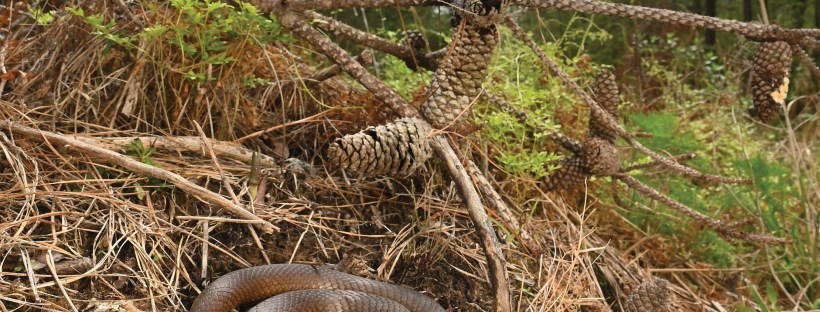
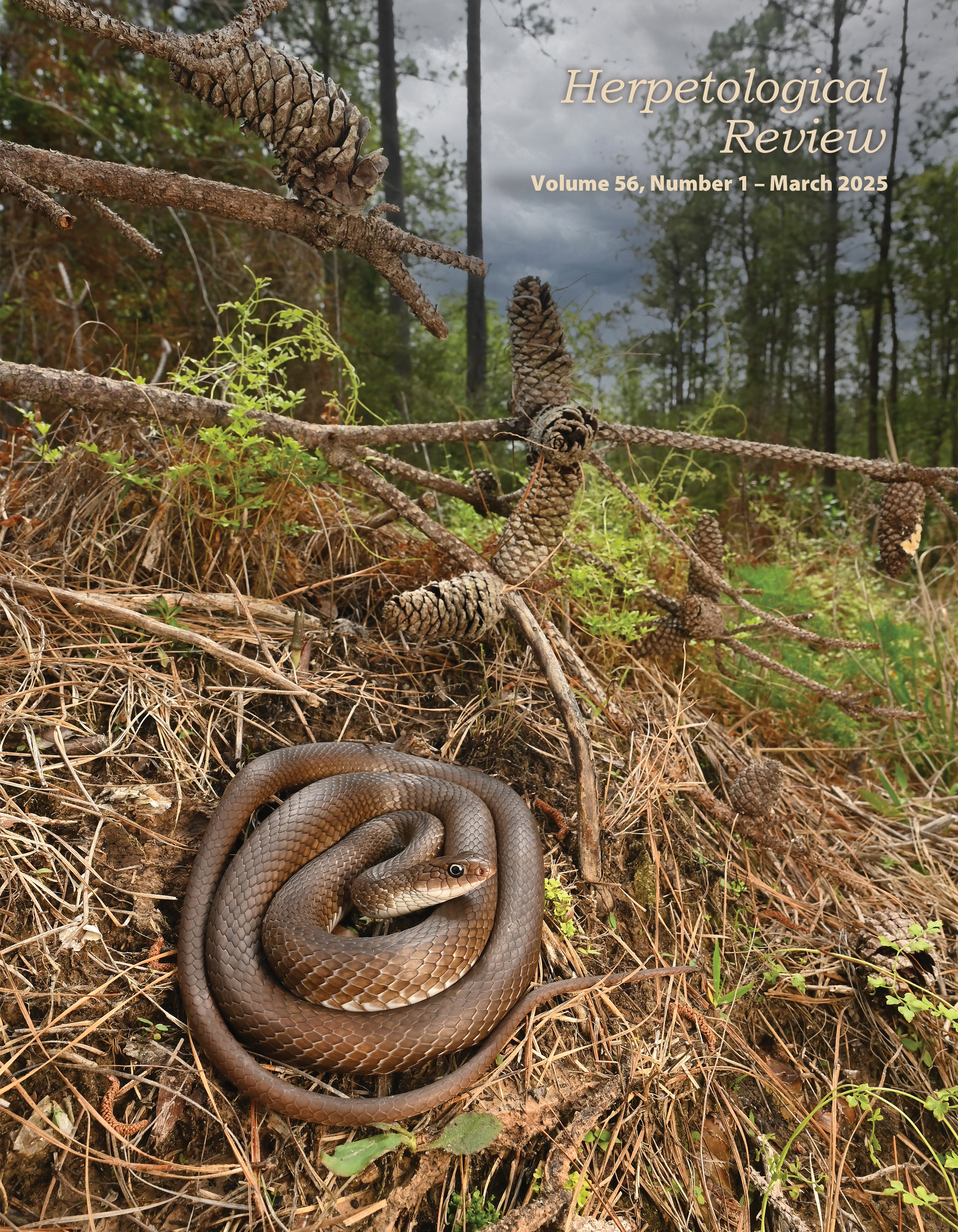 Three new student-led notes were recently published in Herpetological Review 56(1). One was a Geographic Distribution Note reporting seven new occurrence records of six species of Michigan amphibians and reptiles, and was written by M.S. student Jake Kuschel. The other two were notes written by Ben Genter, an undergraduate researcher in the lab. Ben’s notes were: 1) a batch of distributional records of non-native amphibians and reptiles in the Florida, and 2) a Natural History Note describing a predation where at Mexican Treefrog (Smilisca baudinii) had consumed a Mediterranean Gecko (Hemidactylus turcicus) in south Texas. Congratulations to both students on their publications!


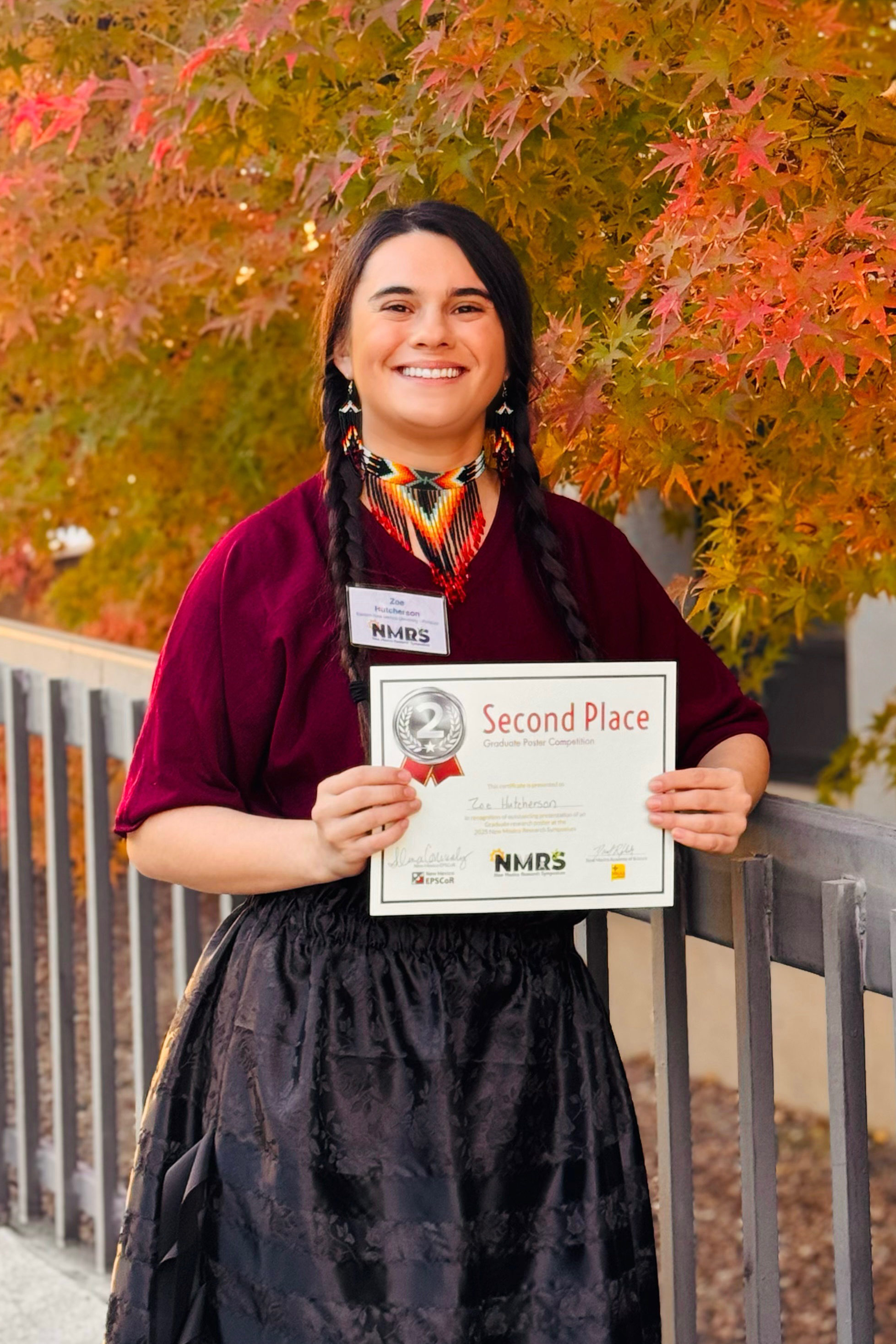 Graduate student Zoe Hutcherson recently attending the New Mexico Research Symposium (NMRS) held in Albuquerque, New Mexico on 15 November 2025. Zoe presented a poster titled, “Understanding the distribution of Rio Grande Cooters and examining spatial variation in their bacterial microbiota” at NMRS and was awarded the second place for her poster. This research is a part of Zoe’s thesis research at ENMU. This is the second time Zoe has won an award at NMRS! Way to go!
 DHL undergraduate student researcher Caden Myers was recently awarded the SnakeDays 2025 Grant! His proposed research, titled “Diet and parasites of the non-native Moorish Gecko (Tarentola mauritanica) in Texas,”
 The Davis Herpetology Lab attended the recent Southwest Partners in Amphibian and Reptile Conservation (SWPARC) meeting held at the University of New Mexico in Albuquerque from 7-10 August 2025. Not only did u
 DHL undergraduate student researcher Kevin Green was recently awarded funding from the Texas Academy of Science Annual Student Research Award program. His proposed research, titled “Understanding the distribution and negative effects of recently established invasive Hemidactylus from south Texas,” involves examining the diet and parasites of three non-native species of geckos established in the Rio Grande Valley. He will make trips to the region in spring and fall 2025 to collect samples and continue to better describe the distribution, diet, and parasite load of these species.
 M.S. student Sebastian Summo Elias presented at the annual Joint Annual Meeting (JAM) of the NM/AZ The Wildlife Society Chapters in Albuquerque, NM last week. Sebastian presenting on some of his preliminary results from his field surveys for Western Ribbonsnakes (Thamnophis proximus). While in Albuquerque, the lab also stopped by to visit the ABQBioPark to discuss future collaborations with Stacey Sekscienski (Curator of Herpetology) and visited the Museum of Southwestern Biology at the University of New Mexico to examine specimens related to several on-going projects in the lab on Aspidoscelis, Nerodia, and Thamnophis.
  Drew R. Davis, Ph.D.