An article was just published by the ENMU Office of Advancement and Public Relations featuring DHL M.S. student Sebastian Summo Elias. It provides a brief biography, introduces his thesis research at ENMU on Western Ribbonsnakes, and mentions some of his recent accomplishments. Congrats to Sebastian on being featured and for all his accomplishments while at ENMU. I’m excited to see what is next in store for him as he continues his academic career!
Without updated field data, the current conservation status of Blanchard’s Cricket Frogs (Acris blanchardi), Rio Grande Leopard Frogs (Rana berlandieri), and Plains Leopard Frogs (Rana blairi) remains unclear. All three anuran species are listed as a SGCN in the New Mexico Department of Game and Fish State Wildlife Action Plan (SWAP), emphasizing the urgent need for updated field data to inform management and conservation actions. Anecdotal reports suggest that these species may have declined in recent years, particularly in areas affected by drought, groundwater depletion, and river management practices. The combined survey and management proposed here will generate contemporary occurrences data for these species and help address the threat and risk posed by invasive American Bullfrogs (Rana catesbeiana). The resulting data will guide effective habitat management, restoration, and species recovery efforts—directly supporting the goals of the New Mexico SWAP and the conservation of biodiversity in the Pecos River basin.
Grant Title: Assessing the Distribution and Threats of SGCN Frogs in Eastern New Mexico
DHL undergraduate student researcher Caden Myers was recently awarded the SnakeDays 2025 Grant! His proposed research, titled “Diet and parasites of the non-native Moorish Gecko (Tarentola mauritanica) in Texas,” involves examining the diet and parasites of this recently established species in San Antonio. Over Summer 2025, Caden sorted, identified, and analyzed two years of diet data from previously collected samples and presented the data collected so far at the recent SWPARC Meeting in Albuquerque. With these funds, Caden will be able to join on a sampling trip planned for September 2025 and collect a third year of dietary data (along with additional data on perch height) and examine both internal and external parasites from all collected specimens. His work will help generate a better understanding of the direct and indirect effects of this introduced species on native species.
DHL undergraduate student researcher Kevin Green was recently awarded funding from the Texas Academy of Science Annual Student Research Award program. His proposed research, titled “Understanding the distribution and negative effects of recently established invasive Hemidactylus from south Texas,” involves examining the diet and parasites of three non-native species of geckos established in the Rio Grande Valley. He will make trips to the region in spring and fall 2025 to collect samples and continue to better describe the distribution, diet, and parasite load of these species.
Undergraduate student researcher Kevin Green was recently awarded funding from the Texas Herpetological Society’s Grants-in-Herpetology program. His proposed research, titled “Understanding the distribution and negative effects of recently established invasive Hemidactylus from south Texas,” involves examining the diet and parasites of three non-native species of geckos established in the Rio Grande Valley. He will make trips to the region in spring and fall 2025 to collect samples and continue to better describe the distribution of these species.
The Davis Herpetology Lab has been awarded funding from the Indiana Department of Natural Resources, Division of Fish and Wildlife to conduct surveys for four imperiled species of turtles in Indiana: River Cooter (Pseudemys concinna), False Map Turtle (Graptemys pseudogeographica), Smooth Softshell (Apalone mutica), and Eastern Mud Turtle (Kinosternon subrubrum). There has been little focused research on these species in the state, limiting the ability to make informed management decisions. These surveys will occur from 2025–2027 across southwestern Indiana and support graduate thesis research. Recent data suggests that some of these species occur across a greater range than previously expected, and visual surveys and hoop-net trapping will help to better understand the current range of these species in the region.
Grant Title: Assessing the Distribution and Conservation Status of Imperiled Aquatic Turtles in Southwestern Indiana
The Davis Herpetology Lab has been awarded funding from the New Mexico Department of Game and Fish to conduct surveys for Western Ribbonsnakes (Thamnophis proximus) along the Pecos and Canadian rivers in eastern New Mexico. There has been little focused research on this state-threatened species, and therefore, information surrounding it remains limited. This project will last allow for two seasons of field surveys and will support the thesis work of M.S. student Sebastian Summo Elias. We will conduct multiple forms of surveys in order to generate detections of this species across its historic range, hopefully confirming the persistence of historic populations and identifying new areas where this species occurs.
Grant Title: Validating a distribution model for the Western Ribbonsnake in New Mexico
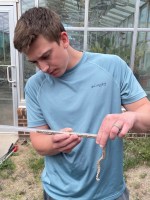
Two students in the Davis Herpetology Lab, Sebastian Summo and Kevin Green, were recently awarded funding for proposed summer research. Congratulations to them both!
Sebastian was awarded a Howard McCarley Student Research Award from the Southwestern Association of Naturalists (SWAN) for his proposal titled “Understanding the Distribution and Threats to Imperiled Western Ribbonsnakes (Thamnophis proximus) in Eastern New Mexico.” This funding will help support Sebastian’s summer research and thesis data collection on state-threatened ribbonsnakes.
Kevin was awarded funding from Midwest Partners in Amphibian and Reptile Conservation (MWPARC) through their Fueling Student Field Experiences Travel Grant titled “Examining the Current Distribution of the Invasive Common Wall Lizard (Podarcismuralis) along the Ohio River.” This funding will help Kevin participate in a trip to survey for these non-native lizards this summer and collaborate with the Indiana DNR on this project.
I was recently awarded a Wildlife Diversity Small Grant from South Dakota Game, Fish and Parks to survey for the state-threatened Eastern Hog-nosed Snake (Heterodon platirhinos). The Eastern Hog-nosed Snake (Heterodon platirhinos) is a medium-sized, state-threatened snake that is distributed across most of the eastern USA, throughout the Great Lakes region, and into the Great Plains. Within the Great Plains, Eastern Hog-nosed Snakes reach their northernmost extent in South Dakota. Previously, the Eastern Hog-nosed Snake was thought to be restricted to extreme southeastern South Dakota along the Missouri River in Clay and Union counties, until two additional records greatly expanded the putative distribution of this species in the state. The first was a specimen collected from Chamberlain, Brule County in 1943 (Biodiversity Collections, University of Texas at Austin [TNHC] 106094) that was part of a recently accessioned voucher specimen collection from South Dakota State University. The second was a photograph of an Eastern Hog-nosed Snake from Rosebud Reservation, Todd County taken in 2017 (HerpMapper [HM] 193175). These new records are ca. 221 and 324 km west of the nearest record of Eastern Hog-nosed Snake in Clay County (University of Nebraska State Museum [UNSM] ZM-16478), represent the only known records for this species in central and western South Dakota, and provide evidence that populations of Eastern Hog-nosed Snakes occur along the Missouri River and riparian corridors in south-central South Dakota. To better understand the distribution and occurrence of Eastern Hog-nosed Snakes, I will conduct a series of targeted surveys for this species in south-central South Dakota.
Grant Title: Surveys for the state-threatened Eastern Hog-nosed Snake (Heterodonplatirhinos) in south-central South Dakota
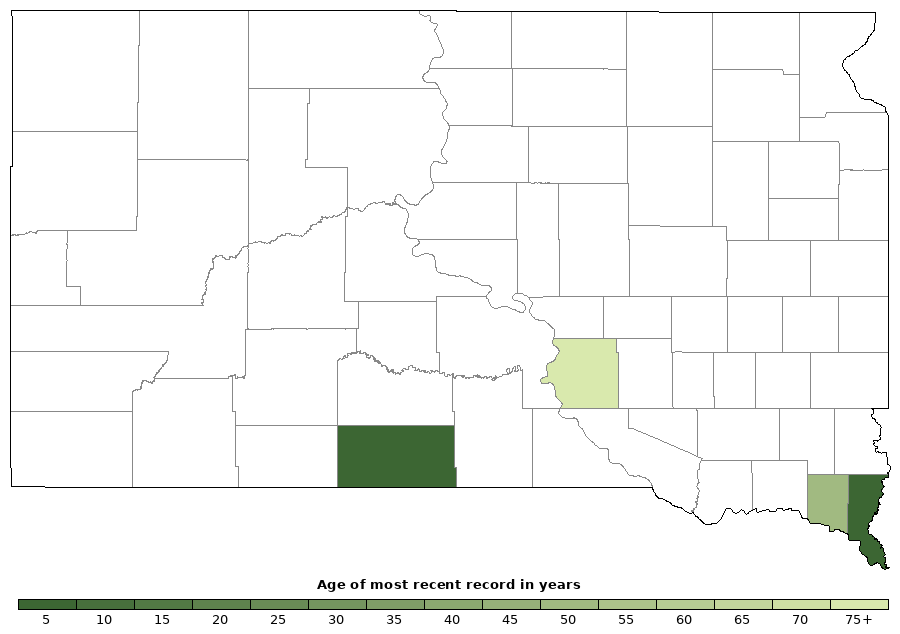
Today I received notice that I was awarded a Wildlife Diversity Small Grant from South Dakota Game, Fish and Parks to survey for the state-endangered Lined Snake (Tropidoclonion lineatum). Within South Dakota, the Lined Snake was thought to occur only in habitats along the Big Sioux River watershed, until I collected a specimen was collected near the James River in Hutchinson County in October 2017. This recently collected snake represents the most northwestern occurrence for this species, provides evidence that populations of Lined Snakes may exist outside of the Big Sioux River watershed, and suggests that the distribution of Lined Snakes in South Dakota may be greater than expected. To better understand the distribution and occurrence of Lined Snakes in southeastern South Dakota, I proposed to conduct a series of targeted surveys for Lined Snakes along the lower James River valley.
Grant Title: Surveys for the state-endangered Lined Snake (Tropidoclonion lineatum) along the lower James River Valley
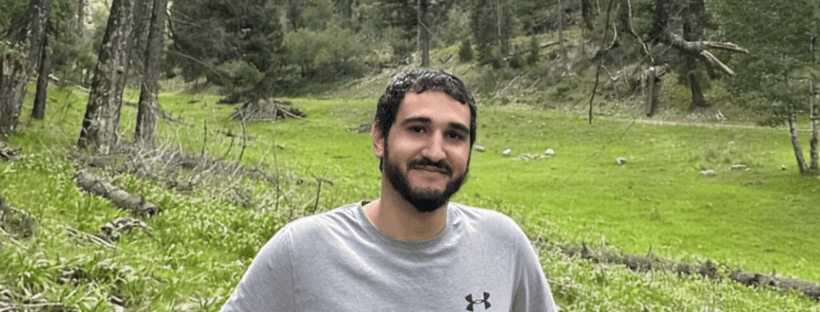
 An article was just published by the ENMU Office of Advancement and Public Relations featuring DHL M.S. student Sebastian Summo Elias. It provides a brief biography, introduces his thesis research at ENMU on Western Ribbonsnakes, and mentions some of his recent accomplishments. Congrats to Sebastian on being featured and for all his accomplishments while at ENMU. I’m excited to see what is next in store for him as he continues his academic career!


 DHL undergraduate student researcher Caden Myers was recently awarded the SnakeDays 2025 Grant! His proposed research, titled “Diet and parasites of the non-native Moorish Gecko (Tarentola mauritanica) in Texas,”
 DHL undergraduate student researcher Kevin Green was recently awarded funding from the Texas Academy of Science Annual Student Research Award program. His proposed research, titled “Understanding the distribution and negative effects of recently established invasive Hemidactylus from south Texas,” involves examining the diet and parasites of three non-native species of geckos established in the Rio Grande Valley. He will make trips to the region in spring and fall 2025 to collect samples and continue to better describe the distribution, diet, and parasite load of these species.
 Undergraduate student researcher Kevin Green was recently awarded funding from the Texas Herpetological Society’s Grants-in-Herpetology program. His proposed research, titled “Understanding the distribution and negative effects of recently established invasive Hemidactylus from south Texas,” involves examining the diet and parasites of three non-native species of geckos established in the Rio Grande Valley. He will make trips to the region in spring and fall 2025 to collect samples and continue to better describe the distribution of these species.
 The Davis Herpetology Lab has been awarded funding from the Indiana Department of Natural Resources, Division of Fish and Wildlife to conduct surveys for four imperiled species of turtles in Indiana: River Cooter (Pseudemys concinna), False Map Turtle (Graptemys pseudogeographica), Smooth Softshell (Apalone mutica), and Eastern Mud Turtle (Kinosternon subrubrum). There has been little focused research on these species in the state, limiting the ability to make informed management decisions. These surveys will occur from 2025–2027 across southwestern Indiana and support graduate thesis research. Recent data suggests that some of these species occur across a greater range than previously expected, and visual surveys and hoop-net trapping will help to better understand the current range of these species in the region.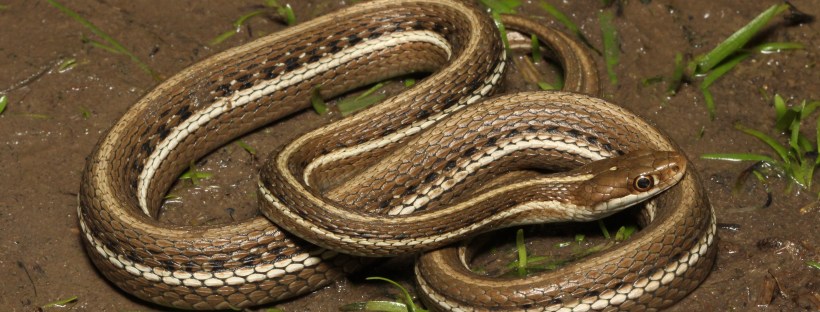
 Sebastian was awarded a Howard McCarley Student Research Award from the Southwestern Association of Naturalists (SWAN) for his
  Kevin was awarded funding from Midwest Partners in Amphibian and Reptile Conservation (MWPARC) through their Fueling Student Field Experiences Travel Grant titled “Examining the Current Distribution of the Invasive Common Wall Lizard (Podarcis muralis) along the Ohio River.” This funding will help Kevin participate in a trip to survey for these non-native lizards this summer and collaborate with the Indiana DNR on this project.



 Drew R. Davis, Ph.D.