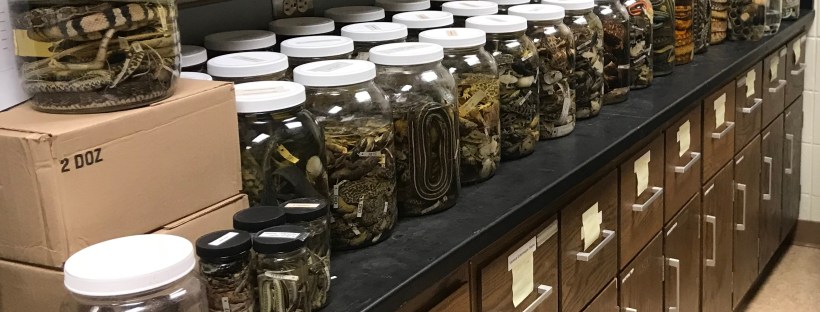
 In a recent Perspective, Byrne (2023) emphasized that natural history museums “are essential hubs for research and education” but that their mission should be reimagined to focus on nonlethal collecting. We endorse many of the practices advocated by Byrne, including the storage of tissues, recordings, photos, and other data; embracing new technologies such as massively parallel DNA sequencing, μCT scanning, and stable isotope analysis; and large-scale digitization of collections and associated metadata. We also welcome the call to provide stable financial support to maintain and expand the infrastructure of existing collections. However, we do not support the call to use new technologies “to replace the need for whole animal bodies.” Byrne’s position overstates the potential of new technologies to replace specimen-based research and fails to acknowledge the importance of whole-organism–based research in building the foundations of modern biology and in continuing to promote new discoveries. Our goal is to underscore the tremendous value of ongoing, whole-organism specimen collection by highlighting some of the key scientific and societal gains that arise from this research.
Nachman MW (and 117 others, including Davis DR). 2023. Specimen collection is essential for modern science. PLoS Biology 21:e3002318. [PDF]
 Drew R. Davis, Ph.D.